If you’re in the machining industry, you’ve probably found yourself stuck at a crossroads: picking between carbide pilots and HSS ones. I get it—when I started out as a carbide pilot supplier, I used to mix these two up too, blowing through extra tooling costs because I didn’t know how their lifespans stacked up. Today, I’m breaking this down straight, no jargon, so you can stop guessing and start making calls that save you time and money. Carbide Pilot
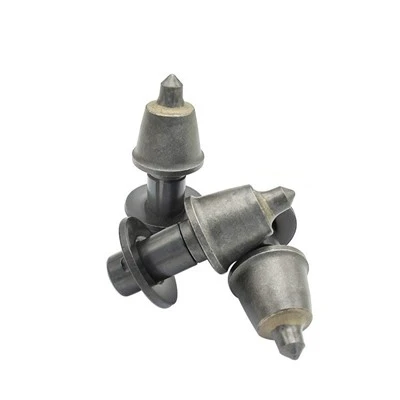
First, let’s get the basics right. HSS stands for High-Speed Steel, and that’s the workhorse many of us grew up with. It’s a tough alloy of steel, mixed with tungsten, molybdenum, chromium, and sometimes vanadium, designed to handle high speeds without wearing out fast. Carbide? That’s short for tungsten carbide—a way harder material, made by fusing tungsten carbide particles with a cobalt binder under intense heat and pressure. Carbide pilots are denser, stiffer, and way more wear-resistant, but they’re also pricier upfront.
Now, the big question: lifespan. Let’s ground this in real numbers, not marketing fluff. I’ve seen countless shops tell me their HSS pilots last anywhere from 500 to 2,000 cycles, max. That’s for typical jobs: drilling steel, aluminum, maybe some cast iron, at moderate speeds. Why so variable? HSS softens when you run it too hot—something that happens fast if you’re pushing feed rates or boring through hard material. I had one regular who ran HSS pilots through 1018 steel; they’d dull after about 800 holes, and the corner edges would chip if he pulled too hard. It didn’t take long for him to switch to carbide once he realized he wasn’t replacing pilots every other day.
Carbide pilots? Their average lifespan is 5,000 to 15,000 cycles for the same types of jobs. Wait, that’s a huge jump—why? Tungsten carbide has a hardness of around 90 HRA (Rockwell A scale), compared to HSS’s 62-70 HRC (Rockwell C, which translates to around 80-85 HRA). That difference might sound small, but in machining, it’s game-changing. Carbide doesn’t soften until it hits 1,400°C (2,550°F), way higher than HSS’s 600°C (1,110°F). So you can run faster speeds, feed more material through, and the pilot just doesn’t wear down as quick. I had another customer who did aerospace titanium parts—his HSS pilots died after 300 holes each, and he was breaking 2 or 3 a day. Switched to carbide, and he went 12,000 cycles between replacements. Saved him hours of downtime and hundreds in tooling costs, easy.
But wait—lifespan isn’t just about cycles. It’s about what causes that wear, too, and that’s where the difference gets even clearer. HSS wears two ways: abrasive wear (small metal shavings rubbing against the pilot, dulling edges) and adhesive wear (material from the part sticking to the pilot, tearing bits off when you pull it out). At high speeds, HSS can even get built-up edge (BUE)—that weird clump of melted workpiece metal that sticks to the pilot, messes up hole quality, and makes the wear way worse. Carbide almost never gets BUE, because its high melting point means workpiece material can’t stick to it the same way. That means your hole dimensions stay consistent for way longer, so you don’t have to stop mid-job to ream or recheck as often.
Carbide does have weaknesses, though—let’s be honest, no tool is perfect. It’s way more brittle than HSS. So if you drop a carbide pilot, or clamp it too tight in the holder, or run into a hidden hard spot in the workpiece, it can chip or snap. HSS will bend or deform, which you can usually grind back, whereas a chipped carbide pilot is done for. I’ve had a few customers who work with super delicate parts, like thin-wall aluminum, shy away from carbide at first because they were worried about breakage. But when we adjusted their feed rates and holder torque, they found carbide worked just fine—way longer lifespan, less downtime from tool changes.
Another thing that affects both: job type. For low-volume, low-speed jobs, HSS might actually be the better call. The upfront cost is lower, and you’re not running it hard enough to push it to its limits. But if you’re doing high-volume runs—10,000 holes or more a day, running 24/7—carbide is the clear winner. Let’s do quick math: say an HSS pilot costs $15, lasts 1,000 cycles. That’s $0.015 per cycle. A carbide pilot costs $60, lasts 10,000 cycles. That’s $0.006 per cycle. Over 10,000 cycles, HSS would cost you $150, carbide $60. That’s a massive difference, right? I show that to customers all the time, and it’s the thing that finally makes them switch.
I’ve also seen people ask about regrinding. HSS pilots are cheap enough that regrinding them usually costs almost as much as a new one, so it’s not worth it. Carbide can be reground, but only a few times—each grind takes off a tiny bit of material, and once you get too close to the cobalt binder, the edge gets weak. Most of my customers don’t even bother with regrinding carbide these days; the lifespan is so long, they just replace them when they get dull, no extra work.
Let’s talk real-world examples from my shop. Last quarter, we had a customer making automotive engine blocks, drilling 12mm holes in cast iron. He was using HSS pilots, changing them every 8 hours, costing him $1,200 a week in tooling alone. Switched to our standard-grade carbide pilots, and he only had to change them once every 6 weeks. That’s $1,200 for 6 weeks vs. $1,200 for 8 hours—you do the math. Another customer does custom metal fabrication, small runs, 500 holes a week. HSS works perfectly for him, no need for carbide, since he’s not running enough to justify the higher upfront cost.
I also want to call out a common myth: more expensive isn’t always better, but with carbide pilots, it usually is. Some cheap carbide out there has a lower cobalt binder, making it harder but more brittle, so lifespan might be closer to 3,000 cycles, not 5,000. Or some HSS is coated—TiN or TiCN coatings can add 20-30% to HSS lifespan, but even then, coated HSS still tops out around 2,500 cycles. So a quality carbide will almost always outlast even coated HSS, no contest.
What about maintenance? HSS is way more forgiving if you’re not a pro. You can grind it by hand if you need a quick touch-up, whereas carbide needs a specialized diamond grinding wheel, which is an extra cost. But again, if you’re doing high volume, the time you save not changing pilots every hour more than makes up for that grinding cost.
At the end of the day, the lifespan gap between carbide and HSS isn’t just a number—it’s downtime, tooling costs, part quality, all of that. I’ve spent years talking to shops big and small, and the ones that switch to carbide for their high-volume jobs are the ones that stay competitive, especially with supply chain headaches driving up tooling costs across the board.
If you’re still on the fence, or curious what kind of lifespan you’d get for your specific machining jobs, I’m here to help. I can walk you through what grade of carbide works best for your material, your feed rates, whatever. No pushy sales stuff, just honest advice as a carbide pilot supplier who’s been doing this for years. Reach out to chat through your needs, and we can figure out the right tooling that saves you the most money and time.
Precision Parts References:
- Machining Data Handbook, 4th Edition, Manufacturing Engineering Association, 2020
- Tool Materials for Metal Cutting, ASM International, 2019
- Carbide vs. High-Speed Steel Tooling: Performance and Cost Analysis, Modern Machine Shop, 2021
- Machining Fundamentals, Jones & Bartlett Learning, 2018
Kunshan Zhiyi Dingli Cemented Carbide Tool Co., Ltd.
We are one of the most professional carbide pilot manufacturers and suppliers in China, also support customized service. We warmly welcome you to wholesale high quality carbide pilot made in China here from our factory. If you have any enquiry about cooperation, please feel free to email us.
Address: No. 80 Chuangfu Road, Qiandeng Town, Mondragon Industrial Park, Kunshan City, Suzhou, Jiangsu, China.
E-mail: 2060056236@qq.com
WebSite: https://www.kszydl.net/
