If you’ve ever walked down a stairwell in an office building, ducked into a hotel suite during a fire drill, or paused to squeeze past a heavy, metal-clad door labeled “Fire Door – Keep Closed,” you’ve probably wondered two things: why that door looks so different from every other interior door, and whether its presence is just a building code nicety, or something the law actually demands. As a third-generation fire door supplier who’s been on job sites, fielding calls from confused facility managers for 18 years, I hear that question at least once a week. The short answer? Yes – fire doors are not optional in most commercial, institutional, and multi-family residential spaces in the U.S. (and in many countries around the world) – but the rules are far more specific than most people realize, and cutting corners is not just risky, it’s illegal. Fire Door
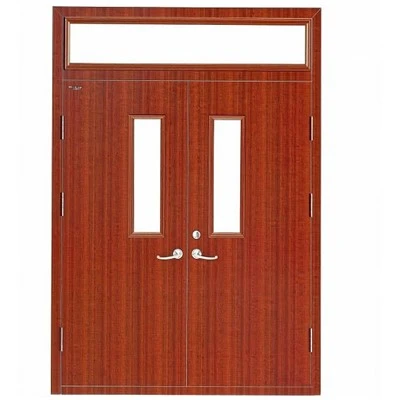
Let’s start with where the law actually comes from. Most local building codes – the rules that dictate how new construction, renovations, and even major tenant improvements get signed off – are rooted in consensus standards developed by organizations like the International Code Council (ICC) and the National Fire Protection Association (NFPA). For fire doors, the key standard is NFPA 80, Standard for Fire Doors and Other Opening Protectives, which has been updated every three to five years to reflect lessons learned from real fires. These standards don’t just exist out of nowhere: they’re adopted into state and local building codes, which means they carry the force of law. A building inspector can’t wave a NFPA 80 manual and demand a fire door that’s not required by the local code – but they can and will issue a stop-work order, fine, or require corrections if a required fire door is missing, damaged, or improperly installed.
I learned this early on, my first year in the business, when a 12-story apartment building in Chicago called us in after a fire drill exposed a problem. The building’s owner had replaced a worn fire door on the 7th floor with a standard hollow-core interior door to save a few hundred dollars during a renovation. An inspector caught it on a routine check, and within a month, the building was facing $15,000 in daily fines until the door was replaced. That story stuck with me – fire doors aren’t just metal barriers; they’re part of a life safety system designed to give people time to evacuate, and firefighters time to contain a blaze. The law recognizes that, so it mandates them in spaces where the risk of fire is highest or the risk of harm if a fire breaks out is greatest.
So where exactly do fire doors become required? The rules vary a bit by jurisdiction, but the core criteria are pretty consistent. First, any space that is classified as a “high-hazard” area – places where fire starts are more likely and spread faster. That includes commercial kitchens (restaurant grills, fryers, and other cooking equipment produce grease fires that can ignite in seconds), boiler rooms, electrical rooms with high voltage equipment, and storage areas for flammable liquids or chemicals. A fire door is required to separate these spaces from adjacent areas like office floors, hallways, or residential units.
Next, most building codes require fire doors to be installed in “exit access” and “exit” paths. That means doors that lead from individual units (apartments, hotel rooms, office suites) to a common hallway or stairwell – those are almost always required to be fire-rated. Why? Because if a fire starts in one unit, that door will slow its spread long enough for everyone in the building to get out. In buildings that are taller than three stories, or have more than 16 residential units, fire doors are even more strictly required: the entire exit path might need to be lined with fire-rated walls and doors to create a “protected egress” corridor.
I’ve also seen fire doors required in institutional spaces like hospitals, schools, and nursing homes. These buildings house people who can’t evacuate on their own – nurses, teachers, and security staff need time to move patients or students to safety, and fire doors are a critical part of that timeline. A few years back, we worked with a small clinic in Ohio that was being renovated to add a wing for elderly patients. The architect had initially planned to use standard doors between the new patient rooms and the main hallway, but the local building inspector pointed out that the clinic’s population was classified as “high-risk” for evacuation, so each room’s door had to be a 20-minute fire-rated door, and the corridor door at the end of the hall had to be a 1-hour rated door. That’s not a suggestion – it’s what the code required, and the clinic couldn’t have opened without it.
Now, here’s the part that trips up a lot of people: fire door requirements aren’t just for new construction. Existing buildings have to comply with the same rules, especially when they undergo renovations or change use. A 1980s office building that’s being converted to apartments will have to install fire doors where they didn’t exist before, not just in the new residential units but also in any common areas that connect to the units. Even a small change, like adding a new wall between two offices, might trigger a fire door requirement if that wall is part of the egress path.
But installing any door and calling it a fire door won’t cut it. The law (and NFPA 80) has very specific requirements for what makes a door a certified fire door. It’s not just a metal door with a label – it has to be tested and listed by a third-party certification body, like Underwriters Laboratories (UL) or Intertek, to meet a specific fire resistance rating: 20 minutes, 45 minutes, 1 hour, 2 hours, or even 3 hours, depending on its location. The door itself, its frame, hinges, hardware, and even the seals around the edges (called “intumescent seals,” which expand when exposed to heat to close gaps) all have to be part of that tested assembly. A standard steel door from a big box store isn’t fire-rated unless it’s part of this tested system – cutting corners here means you’re not just violating code, you’re putting lives at risk.
I’ve seen this mistake more times than I can count. A restaurant owner in Detroit once ordered what he thought was a fire-rated kitchen door from a local distributor, but it was a standard steel door without the intumescent seals and the matching frame. When we did a follow-up inspection for the fire marshal, it failed on two counts: the door assembly wasn’t listed, and the gap between the door and frame was too wide, which would have allowed smoke and fire to spread in a real emergency. The owner had to rip it out and start over, costing him twice as much as he would have paid for a certified door from the start. That’s why working with a supplier that understands the code isn’t just convenient – it’s necessary to stay compliant.
Another common misconception: fire doors don’t have to be “closed” at all times. Wait, that’s the opposite of what every fire drill tells you, right? But there’s an exception for “self-closing” or “hold-open” devices. The law allows fire doors to be held open by a magnetic device that releases automatically when the fire alarm goes off, so they don’t block foot traffic during the day. But that device has to be approved for fire door use, and it has to be tested to make sure the door closes properly when power is cut – no propping fire doors open with wedges or furniture, which is one of the most frequent code violations we see. Propping a fire door open voids its fire rating, turns it into just a regular door, and is a misdemeanor in most states, with fines that can run into thousands of dollars if it’s caught during an inspection or leads to a fire.
So what happens if a building is found to have missing or non-compliant fire doors? Penalties vary by location, but they’re not minor. A commercial building can face fines starting at $500 per violation per day, and in some cases, the fire marshal can order the building to be vacated until corrections are made. If a fire does break out and is determined to have spread because of a missing or non-compliant fire door, the building owner, facility manager, and even the architect can face legal liability, including lawsuits from injured parties or criminal charges for negligence. I was on a call two years ago with a facility manager from a college dorm in Pennsylvania that had a small fire in a vending machine closet. The fire door between the closet and the hallway had been propped open with a mop handle, and the fire spread to the hallway, causing smoke inhalation for three students. The college was fined $20,000, and the facility manager lost his job and had to pay restitution to the students. That’s a heavy price to pay for a small convenience that’s actually against the law.
For my team, this isn’t just about selling doors – it’s about making sure our customers stay on the right side of the law, and keep people safe. We work with architects, general contractors, facility managers, and even small business owners to walk through their space, identify where fire doors are required, and source the exact certified assemblies that meet their local code. We don’t cut corners on certifications, and we make sure every door we supply comes with the necessary documentation for inspectors – a detail that a lot of other suppliers overlook, and that can hold up a project or lead to failed inspections.
If you’re not sure whether your building has all the required fire doors, or if you’re planning a renovation that might trigger new requirements, don’t wait for an inspector to come knock on your door. Fire door rules are not vague technicalities – they’re legal mandates designed to protect lives. A quick review with a trusted supplier who knows NFPA 80 and your local building code can save you from fines, delays, and even legal trouble down the line. We work with clients across all types of properties, from small retail stores to large multi-family complexes, and we can help you navigate every step of the process, from selecting the right rated door to ensuring it meets all local code requirements.

If you’re ready to review your fire door needs or get a quote for a compliant installation, we’re here to help. Don’t leave your life safety and legal compliance to chance – connect with us today to discuss your project, and we’ll make sure you have exactly what’s required, no more, no less.
Smoke Curtain References
- National Fire Protection Association. (2021). NFPA 80, Standard for Fire Doors and Other Opening Protectives. Quincy, MA: National Fire Protection Association.
- International Code Council. (2022). International Building Code (IBC). Washington, D.C.: International Code Council.
- U.S. Fire Administration. (2020). Fire Door Safety: A Guide for Facility Owners and Managers. Emmitsburg, MD: U.S. Fire Administration.
- Occupational Safety and Health Administration. (2019). Fire Safety Standards for Commercial Buildings. Washington, D.C.: Occupational Safety and Health Administration.
Hebei Hong’an Fire Door Co. Ltd.
Hebei Hong’an Fire Door Co., Ltd. is one of the most professional fire door manufacturers and suppliers in China, featured by quality products and low price. Please rest assured to wholesale advanced fire door made in China here from our factory. Customized orders are welcome.
Address: Bianbian Industrial Zone, Hejian City, Cangzhou City, Hebei Province, China
E-mail: hongandoor@outlook.com
WebSite: https://www.honganfd.com/
