If you’ve ever walked into a stone fabrication shop and watched a CNC bridge saw slice through a 2-inch thick slab of granite like it was butter, you know just how transformative these machines are for the countertop, monument, and architectural stone industries. For nearly a decade, I’ve worked on the floor of our CNC bridge saw supply company, talking to fabricators, designers, and even small stone yard owners who come in with the same question: Can a CNC bridge saw be customized? The short answer is yes—but the long answer is a lot more nuanced, tied to how these machines are built, what fabricators actually need, and why customization isn’t just a “nice-to-have” for most shops, it’s a necessity. Cnc Bridge Saw

I still remember the first time a customer pushed back on our off-the-shelf model. It was 2017, a small family-owned shop in Vermont that specialized in custom fireplaces and historic stone restoration. They had a standard 5×10 ft CNC bridge saw, but their biggest job that year was replicating a 12-foot long marble mantel for a 19th-century mansion. The off-the-shelf machine’s cutting table only extended 10 feet, and the saw’s arm couldn’t reach far enough to cut the full length of the mantel without clamping the slab in sections. That meant extra handling, higher risk of chipping the delicate marble, and 20 more hours of labor than they’d budgeted for. “We could buy a bigger machine,” the shop owner, Tom, told me, “but our shop is only 12 feet wide—there’s no room for a model with a 15-foot table.”
That conversation stuck with me. It’s easy to assume all CNC bridge saws are one-size-fits-all, but every stone shop has unique constraints: space, the types of stone they work with, their order volume, even the skill level of their operators. Over the years, we’ve built our entire approach to customization around these real-world pain points, and we’ve seen firsthand how tailored machines can change a business’s bottom line.
Let’s start with the core components of a CNC bridge saw that can be customized, because not every part of the machine is worth modifying—and not every modification delivers value. First, the cutting table. Standard tables are usually 8 to 12 feet long, but we’ve built tables as small as 4 feet for compact urban stone yards in New York City where every square foot of floor space costs thousands of dollars. We’ve also built tables as long as 18 feet for shops that handle precast concrete panels for high-rise buildings or massive cemetery monuments. The table’s grid system—those metal bars that hold the slab in place—can also be adjusted. If a fabricator works with lots of irregularly shaped stone or thick 6-inch quartzite slabs, we can install heavy-duty, adjustable clamps instead of the standard fixed bars. For shops that process a lot of small tiles or mosaic pieces, we can add a vacuum hold-down system that gently grips thin slabs without leaving scratches, something that’s not standard on most entry-level machines.
Next, the saw arm and cutting head. This is where most of the action happens. Standard bridge saw arms have a horizontal range of 5 to 10 feet, but we can extend that range up to 14 feet for jobs that require long cuts, like outdoor kitchen countertops or large stair treads. The cutting head itself is another area for customization. For fabricators who work mostly with soft marble and limestone, a standard diamond blade works fine, but if you’re cutting hard granite, quartz, or engineered stone with embedded glass or metal, you can upgrade to a segmented blade or a diamond blade with a higher grit count that reduces chipping by up to 30%. We also offer customization for the head’s rotation angle: most standard saws rotate 0 to 90 degrees, but we can adjust that to 0 to 180 degrees for shops that do a lot of miter cuts for custom edges or curved stonework. A couple of years ago, we worked with a shop in Florida that specialized in luxury pool decks; they needed to cut large curved travertine edges, so we customized the saw head to rotate 12 degrees past 180, which eliminated the need for manual grinding on every edge. That small change cut their edge finishing time by 25% per job.
Then there’s the control system and software, which is where customization gets really personal. Most entry-level CNC bridge saws come with basic software that lets you import DXF or CAD files and run standard cuts, but for fabricators who do complex work like 3D stone carving, inlay work, or historic replication, that software falls short. We can customize the control system to integrate with specialized design software like ArtCAM or Aspire, which are commonly used in the stone industry to create intricate designs. We also tailor the software interface to the skill level of the shop’s operators. For small shops with operators who only have basic computer skills, we can simplify the touchscreen interface so it only shows the buttons they use most: load slab, select job, start cut, emergency stop. For larger shops with dedicated CNC technicians, we can add advanced features like remote monitoring, which lets us troubleshoot issues without sending a service technician out, or batch processing that lets the saw run multiple small jobs overnight with minimal supervision.
One of the most requested customizations we get is for dust collection systems, and it’s one of the most important ones for workplace safety. Cutting stone produces silica dust, which is a major health hazard if not properly contained. Standard dust collection systems work for average cutting, but if you’re working with very fine stone dust (like from engineered quartz) or doing high-volume cutting that generates more dust, we can upgrade to a HEPA-filtered dust collection system that meets OSHA’s strict silica standards for construction and fabrication shops. We also customize the dust collection hood to fit the saw’s arm and table, so it sits closer to the blade and captures more dust instead of letting it drift into the air. We’ve had shops tell us that after we customized their dust collection system, their employees no longer need to wear heavy respirators during full shifts, and they’ve passed their OSHA inspections without any issues.
Of course, customization isn’t just about upgrading parts—it’s also about adapting the machine to a shop’s specific workflow. For example, we recently worked with a shop in Arizona that does mostly commercial countertop jobs for restaurants and hotels. Their workflow requires moving slabs from the cutting area to the edge finishing area quickly, so we customized our CNC bridge saw to integrate with their existing material handling system: a set of overhead cranes that move slabs around the shop. That meant modifying the saw’s base to fit the crane’s lifting points, and syncing the machine’s software with the crane’s control system so the slab is automatically positioned for the next cut. Without that customization, the shop would have had to install an entirely new material handling system, which would have cost them 10 times more than modifying our existing machine.
I know what some of you are thinking: “Customization sounds great, but it must be way more expensive than a standard machine.” It’s true that a fully customized CNC bridge saw will cost more upfront, but we’ve crunched the numbers with hundreds of our customers, and the ROI is almost always within 12 to 24 months. Let’s go back to Tom, the Vermont shop owner I mentioned earlier. He initially thought a standard 10-foot table saw would cost him $15,000, but when we quoted him a customized 12-foot table that fit his shop’s space and had the vacuum hold-down for his small pieces, it was only $2,000 more than the standard model. In the first year after installing the machine, Tom told us he saved over $30,000 in labor because he didn’t have to manually handle large slabs or re-cut sections that were damaged during awkward cuts. That’s a return on investment of 15 times the extra cost in just one year.
That said, there are limits to what we can customize, and we’re always upfront with customers about that. For example, we can’t completely alter the machine’s core frame, because that’s what gives it stability for precise cuts. A CNC bridge saw’s frame is engineered to be rigid—even a small flex in the frame can lead to uneven cuts, which ruin expensive stone slabs. So we don’t modify the frame beyond what’s necessary to fit a custom table or arm. We also don’t recommend customizing beyond a shop’s actual needs. A small shop that only does residential countertops, for example, doesn’t need a 18-foot table or a 3D carving head; that would just add unnecessary cost and complexity. Our team works with every customer to assess their workflow, their current and projected business, and their shop’s space, then recommends the customization that will deliver the most value without overbuilding the machine.
Over the years, we’ve seen too many shops buy standard CNC bridge saws and struggle to adapt them to their work. We’ve had customers come to us after a year of using a big-box brand saw that couldn’t cut their specific stone, or that was too big for their shop, and they ended up spending thousands of dollars retrofitting parts that should have been customized from the start. That’s why we prioritize customization as a core part of our service, not an add-on.
If you’re a stone fabricator, monument maker, or architectural stone designer who’s tired of a CNC bridge saw that doesn’t quite fit your work, we can help. We’ve worked with shops of all sizes, from one-person operations to large commercial fabrication facilities, to build customized machines that solve their unique challenges. Whether you need a compact saw for a tight urban shop, a long-table saw for large projects, a software upgrade for complex designs, or a dust collection system that meets safety standards, our team will work with you to design a machine that fits your needs, not the other way around.
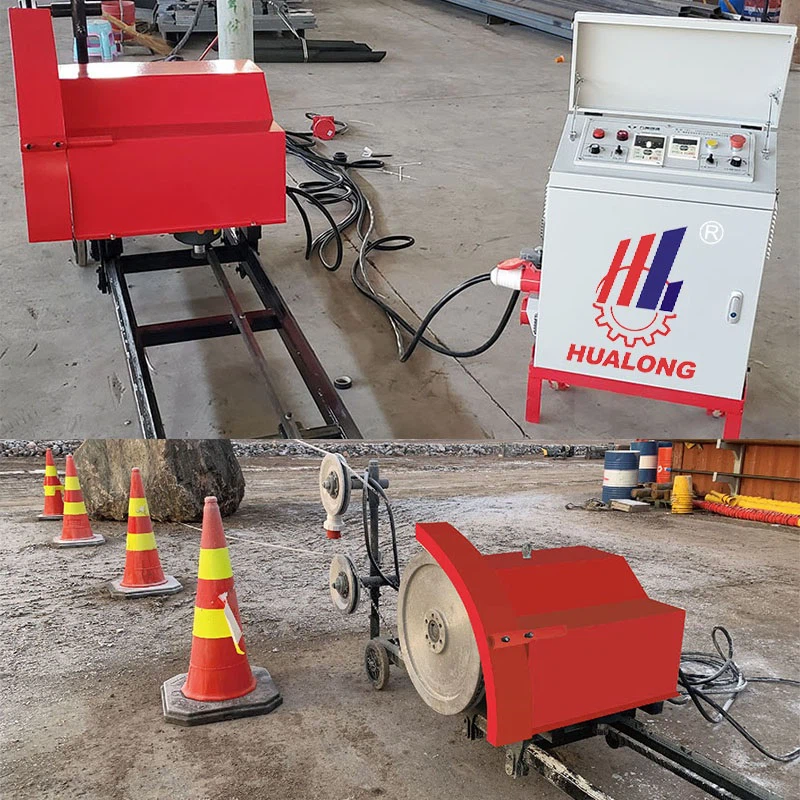
Ready to talk about your specific needs and get a customized quote for a CNC bridge saw? Get in touch with our team to start the conversation about how we can build the right machine for you.
Stone Processing Center References
- Stone Fabricators Alliance. (2022). Customization in Stone Fabrication Machinery: Industry Trends and Best Practices. Stone Magazine, 45(3), 22-27.
- OSHA. (2021). Silica Dust Exposure in Stone Fabrication: Compliance Guidelines for Machinery. Occupational Safety and Health Administration Publication, 1-18.
- American Society of Mechanical Engineers. (2020). Standard for CNC Stone Cutting Machinery (B107.3-2020). ASME International, 1-42.
- National Stone Surface Association. (2023). Custom Machinery for Complex Stone Projects: A Case Study of 50 U.S. Fabrication Shops. NSSA Research Report, 11(2), 14-21.
Fujian Province Hualong Machinery Co., Ltd.
Fujian Province Hualong Machinery Co., Ltd. is one of the most professional cnc bridge saw manufacturers and suppliers in China, featured by quality products and good price. Please rest assured to buy high-grade cnc bridge saw for sale here from our factory.
Address: Huangshi Industrial Zone, Putian City, Fujian Province, China
E-mail: jenkin@hualongm.com
WebSite: https://www.stonecuttingmachine.com/
