If you’ve ever worked on a project that relies on high-quality reflective surfaces—think solar panels, decorative architectural accents, or precision optical components—you know the role mirror aluminum coils play as a foundational material. As a supplier of these coils, I get dozens of questions each week from fabricators, engineers, and project managers asking how to separate a high-performing coil from one that will cause delays, rework, or lost revenue down the line. It’s not just about shiny metal; it’s about consistent, measurable performance that aligns with your project’s specific needs. Over the 12 years I’ve spent sourcing and working directly with fabricators, I’ve learned that evaluating mirror aluminum coil performance boils down to a mix of standardized industry checks, hands-on testing, and understanding how your coil will hold up in the real world. Let’s break down what actually matters, no fancy jargon or vague claims. Mirror Aluminum Coil
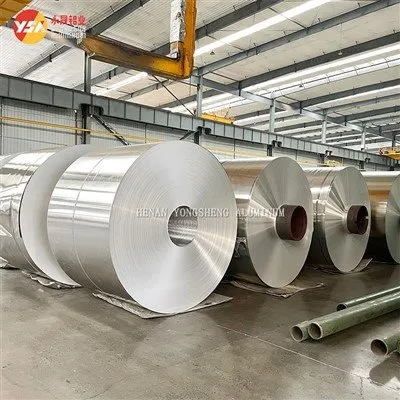
First, start with the basics: the aluminum core itself. You wouldn’t build a car on a faulty frame, and the same goes for mirror coils. Most standard mirror aluminum coils are made from 1xxx series (pure aluminum) for their reflectivity, or 3xxx series (aluminum-manganese alloy) for extra durability. But not all grades within those series are equal, and even small inconsistencies in alloy composition can derail performance. I once worked with a fabricator who switched to a cheaper 3003 coil from a no-name supplier to cut costs, only to find 12% of their finished reflective parts had subtle, uneven grain patterns. That’s because a few batches of that coil had slightly higher silicon content than specified, which made the surface texture uneven when polished. So first step: check material certification. A legitimate coil supplier will provide mill test reports (MTRs) that list exact alloy composition, tensile strength, and thickness consistency. For example, if your project requires 0.5mm thick 1100 aluminum, the MTR should confirm that each batch is within ±0.02mm of that thickness—too much variation and you’ll end up with uneven reflectivity after coating. Thickness consistency is especially critical for large-scale projects, like rooftop solar reflectors, where minor variations add up across hundreds of coils.
Next, the thing most people care about first: reflectivity. This is the whole point of a mirror aluminum coil, after all. But there’s a right way and a wrong way to test it. A lot of fabricators will just hold a coil up to light and call it “shiny,” but that’s subjective. For industrial applications, we use a spectrophotometer to measure specular reflectance at a specific wavelength—usually between 400nm and 700nm, the range of visible light. Standard industry specifications (like those from the Aluminum Association) call for a minimum of 85% reflectivity for general mirror applications, 90% for optical uses. But context matters. If you’re making reflectors for a solar thermal system that needs to focus sunlight, you’ll want to test reflectivity at a broader wavelength range (including near-infrared, 700nm to 2500nm) because that’s where solar energy is strongest. I always advise clients to share their intended use case before picking a coil, because not all high-reflectivity coils work for every job. For example, a coil that’s polished to 95% visible reflectivity might have lower near-infrared reflectivity if it’s optimized for decorative use, not energy applications. Also, watch out for coating quality here. The protective layer on mirror aluminum coils—usually a clear acrylic or polyester lacquer—can scratch or degrade over time, but it should not reduce core reflectivity. A bad coating will leave streaks or dull spots right after application, so a quick wipe test with a soft microfiber cloth should reveal any defects here.
Surface quality is another make-or-break metric, and it’s where a lot of first-time buyers get tripped up. Mirror aluminum coils are polished to a fine finish, but tiny imperfections can ruin a finished product. The two main surface defects to check are roughness and defects like pits, scratches, or rolling lines. Surface roughness is measured in Ra (average roughness) values—for most mirror applications, you want an Ra of 0.2μm or lower. Any higher than that and the surface will scatter light instead of reflecting it evenly, leading to blurry reflections or uneven brightness across large parts. I once had a client in the lighting industry reject a shipment of coils because their Ra was 0.28μm; when they turned the finished LED reflectors on, the light had hot spots that made the product unmarketable. For optical applications, we aim for Ra under 0.1μm. Beyond roughness, you’ll want to inspect the entire coil for surface defects. This is where modern inspection tools help—many suppliers use automated line-scan cameras to check every foot of a coil for pits larger than 0.1mm or scratches longer than 1mm, because even a tiny scratch can become a visible mark on a large mirror. If you’re buying small quantities, you can do a basic inspection yourself: unroll a few meters of coil in natural light, hold it at a 45-degree angle, and look for any unevenness or spots that don’t reflect the light evenly. Avoid coils with visible rolling lines, which are common in cheaper coils that use older rolling equipment.
Durability, especially environmental durability, is often overlooked in the performance evaluation, but it’s what determines how long your coil will last in the field. A coil that looks perfect in the warehouse might corrode, fade, or scratch in three months if it’s not made for your conditions. The first test here is adhesion: the protective coating needs to stick to the aluminum core, especially in harsh environments like coastal areas (salt spray) or industrial zones (high humidity and chemicals). To test adhesion, do a cross-hatch test: use a utility knife to make 1mm x 1mm squares on the coated surface, apply adhesive tape firmly, and pull it off quickly. If any coating comes off on the tape, the adhesion is poor, and the coil will degrade over time. Another key test is weather resistance. For outdoor applications, the coil should pass a 1,000-hour salt spray test (per ASTM B117) and a 2,000-hour UV exposure test (per ASTM G154) without significant loss of reflectivity or coating damage. I can’t tell you how many times I’ve seen suppliers promise “outdoor durability” but their coils start to turn dull after 6 months of sun and rain. That’s because they cut corners on the coating thickness—high-quality mirror aluminum coils have a coating thickness of 15 to 25μm, while cheap ones often have 5μm or less. Coating thickness can be measured with a magnetic thickness gauge, which is a cheap tool every fabricator should have. For coastal projects, I always recommend a coil with a 20μm or thicker coating and aluminum that’s at least 3xxx series, which is more corrosion-resistant than pure 1xxx series.
Formability is another critical performance metric, especially if you’re cutting, bending, or forming the coil into custom shapes. A highly reflective coil is useless if it cracks or loses its reflectivity when you bend it. This is where yield strength and elongation come into play, both of which are listed on the mill test report. Elongation measures how much a material can stretch before breaking; for mirror coils, you want an elongation of at least 10% to handle bending without cracking. For example, if you’re making curved solar reflectors that need to be bent to a tight radius (say, 50mm), you’ll need a coil with higher elongation—around 15%—to avoid cracking. I once worked with a sign maker who used a cheap mirror coil that cracked when they tried to bend it into a custom curve for a storefront; they had to scrap all 500 pieces and reorder, which cost them $8,000 in labor and material. To test formability yourself, take a small sample of the coil and bend it 180 degrees around a mandrel with the radius you’ll use for your project. If the coating cracks or the aluminum breaks, that coil isn’t suitable for your application. Also, watch for “springback,” which is when the coil bounces back a little after bending. High-quality coils have consistent springback, which let you dial in your bends accurately, while cheaper coils can have inconsistent springback that makes mass production impossible.
Consistency across batches is the final, and often most important, metric for evaluating mirror aluminum coil performance. A coil might perform great in the first shipment, but if the next batch is different, you’ll have production delays and quality issues. Over the years, I’ve had clients tell me they switched suppliers because the first shipment was perfect, but the second had uneven thickness, lower reflectivity, or surface defects that ruined their entire run. The best way to check consistency is to ask for data on at least three consecutive batches from the supplier. Look for the standard deviation of thickness, reflectivity, and surface roughness across those batches—low standard deviation means the supplier has tight quality control. For example, if the thickness of the first batch is 0.50mm ±0.01mm, the second is 0.51mm ±0.01mm, and the third is 0.49mm ±0.01mm, that’s consistency you can count on. If the standard deviation jumps to ±0.03mm, that’s a red flag. Also, ask about the supplier’s production process: do they run their equipment on a strict schedule, maintain their rolling and polishing machinery, and test every batch before shipping? I work with suppliers that run 100% in-house testing for every batch, because subcontracted testing can lead to delays and inconsistencies.
At the end of the day, evaluating mirror aluminum coil performance isn’t about picking the shiniest metal or the lowest price—it’s about matching the material’s properties to your specific project needs. Whether you’re working on a commercial building, a solar farm, or a consumer product, taking the time to check material certification, reflectivity, surface quality, durability, formability, and batch consistency will save you from costly reworks, delays, and failed projects. As a supplier, my priority is to provide coils that meet those metrics, and to work with clients to pick the right material for their job, no matter how big or small. If you’re working on a project and need to evaluate or source mirror aluminum coil that fits your exact requirements, feel free to reach out to discuss your needs.
Embossed Aluminum Coil References
Aluminum Association. (2021). Standard Specification for Mirror Finished Aluminum Sheet and Plate.
ASTM International. (2019). Standard Practice for Operating Salt Spray (Fog) Apparatus (B117).
ASTM International. (2020). Standard Practice for Operating Fluorescent Ultraviolet (UV) Lamp Apparatus for Exposure of Nonmetallic Materials (G154).
Mott, P. (2018). Metallurgy for the Non-Metallurgist (2nd ed.). ASM International.
Henan Yongsheng Aluminum Industry Co., Ltd.
We are one of the most reliable mirror aluminum coil manufacturers and suppliers in China. With abundant experience, we warmly welcome you to buy high-grade mirror aluminum coil for sale here from our factory. All custom made products are with high quality and competitive price.
Address: Gongyi City Industrial Cluster District, Huiguo Town, Gongyi City, Henan Province
E-mail: eric@ysaluminum.cn
WebSite: https://www.ysaluminummill.com/
