Hey there, let’s cut to the chase—if you’re running a pharma production line (or even a nutraceutical, don’t sleep on those), you’ve probably stared at a tablet and thought, “Why does this one feel too scratchy, or too shiny, or just plain inconsistent?” If you’re dealing with rotary tablet presses (which I am—for the folks who don’t know, I work for a supplier of these workhorses), surface roughness control isn’t some fancy jargon we toss around to sound smart. It’s actually make-or-break for quality, patient safety, and even how much of that finished product you scrap at the end of the day. Rotary Tablet Press

First off, let’s keep this real: what is tablet surface roughness, anyway? For anyone who’s not a formulator stuck in a lab 24/7, it’s just the tiny peaks and valleys on a tablet’s outer layer, measured in microns (super small—like, a human hair is 50-100 microns thick, so we’re talking way tinier). Think of it like this: if your tablet is a hiking trail, roughness is how bumpy the path is. Too bumpy (high roughness) and you’ve got issues. Too smooth (super low roughness) and that’s a whole other bag of problems. But here’s the thing—on a rotary tablet press, which is the workhorse that cranks out 10,000+ tablets per minute, controlling that roughness isn’t as simple as pressing a button. It’s a mix of machine setup, powder prep, and even the tools we use on the press.
Let’s start with the rotary part, since that’s the beast I know best. A rotary press works by spinning a big wheel full of upper and lower punches and dies. Powder gets fed into the die cavity, then the upper punch comes down to compress it into a tablet. Every part of this sequence affects the surface, and if any of those steps are off, roughness goes haywire.
First up: die and punch condition. These are the actual shapes that make the tablet, right? If your punches have scratches or pitting (wear and tear from thousands of presses), that’ll transfer directly to the tablet surface. I see this all the time with new customers—they use cheap, worn punches to save a buck, and wonder why their tablets are coming out rough or inconsistent. Wait, no—if punches are pitted, you get little dimples, not scratches, but either way, it messes with smoothness. Even something as small as die wall lubrication (wait, that’s another one) ties into this. If you’re not using the right amount of lubricant, powder sticks to the punches, and when you eject the tablet, you might tear the surface, leaving those jagged peaks. I always tell customers: invest in good tooling, and replace punches when they show signs of wear—not when they “feel okay.” Cutting corners here costs way more in scrap than buying quality punches upfront.
Next, compression force and speed. On a rotary press, you adjust how hard you push the powder (compression force) and how fast the wheel spins (press speed). Let’s break this down. If you crank compression force too high, what happens? The powder particles smash together so hard that air and fine particles get pushed to the surface, which can create that fuzzy, rough finish we call “capping” or “pickup.” Wait, capping is when the top layer flakes off, but pickup is when fine powder sticks to the punches, leading to a rough tablet. Too low of force, and the tablet isn’t compressed evenly, so you get uneven peaks across the surface. Then speed: if the press is spinning too fast, the powder doesn’t have time to settle evenly in the die. So when you compress it, some areas are denser than others, leading to a lumpy, rough surface. I once had a customer who was running their press at 80 RPM to hit a production target, and their tablet roughness was coming in at 15 microns (too high) with 2% scrap. We dropped it to 65 RPM, adjusted force just a tiny bit, and roughness went down to 8 microns, scrap was zero. It’s all about balance—you can’t just crank speed to make more tablets, not without messing up quality.
Wait, also, the pre-compression step on rotary presses—most of them have that, right? That’s the light compression before the main compression. Why’s that matter for surface roughness? Because pre-compression lets air escape from the powder bed, and lets particles align better before you hit them hard. If you skip pre-compression, or set it too low, when you apply main force, those trapped air particles blow fine powder to the surface, creating that rough, dusty finish. I’ve seen customers turn off pre-compression to save cycle time, only to regret it when their finished tablets fail dissolution tests (and yeah, roughness ties into dissolution too—we’ll get to that). So pre-compression isn’t a useless feature; it’s a key part of controlling that surface.
Now, powder properties—this is half the battle, because no press in the world can fix bad powder. If your powder is inconsistent—like, too many fine particles, or clumpy binder—you’re gonna get uneven roughness. Fine particles tend to stick to punch surfaces during compression, leading to pickup (that rough layer we talked about). Clumpy powder won’t flow evenly into the die, so you get gaps, which when compressed, create lumpy tablet surfaces. Also, particle size distribution: if all particles are the same size, they pack more evenly, leading to a smoother surface. If you have a mix of big and small particles, the big ones stick out, making the surface rough. Formulators work on this, but as a press supplier, we help customers adjust their press setup to compensate—like tweaking feed frames on the rotary press to get better powder distribution, even if their powder has a few kinks. That’s the value of working with someone who knows both machines and real-world production, not just theory.
Oh, and ejection speed! When the tablet is done compressing, you have to push it out of the die. If you eject too fast, the tablet doesn’t have time to stretch evenly, so the surface tears, leaving rough edges. If you eject too slow, it might stick, leading to scuffs. Rotary presses let you adjust ejection pressure and speed, and that’s a tiny setting that makes a huge difference. I had a client who kept getting rough edges on their round tablets, and we realized their ejection speed was set to match a different tablet shape. Adjusting that single parameter fixed 90% of their surface roughness issues. It’s the little stuff, right?
Now, let’s talk about why this even matters—beyond just making a tablet look pretty. Sure, patients might not notice a rough vs. smooth tablet, but wait—dissolution is huge. If a tablet has a rough surface, that means there are gaps and uneven layers, so it doesn’t dissolve evenly in the body. That means inconsistent drug absorption, which is a safety issue, not just a quality one. Regulators (FDA, EMA, you name it) care about this—if your tablets fail dissolution because of bad roughness, you can get a recall, which is a nightmare for any company. Also, packaging: rough tablets can scratch blister packs, leading to moisture getting in, which ruins the product. And for companies making generic drugs, they have to meet exact specifications for surface roughness to get approved. So this isn’t a “nice to have”—it’s a critical quality attribute (CQA), like potency or hardness.
Wait, I mentioned before that I’m a rotary press supplier, so let’s tie this back to what we do. A lot of press suppliers just sell you a machine and say “good luck.” But we don’t—we know that surface roughness control isn’t just about the press, it’s about how all the parts work together. Our rotary presses have adjustable pre-compression, variable speed control, and precision punch and die alignment tools that let you tweak every single parameter that affects surface roughness. We also do on-site support—if a customer is running into issues, our techs will show up, adjust their feed frames, set up the correct compression profiles, and train their operators so they can keep roughness consistent long-term. Because at the end of the day, a press is only as good as the quality it produces, and that’s what we care about.
Let’s bust a common myth, too: you don’t need super expensive equipment to control surface roughness. I’ve seen small nutraceutical companies with mid-range rotary presses putting out tablets with perfect roughness, just because they set up their process right. It’s not about spending a ton of money—it’s about understanding how each variable on the rotary press affects that tiny surface. Things like monitoring roughness in real-time, too—our presses have optional sensors that measure tablet surface as it comes out of the die, so if roughness drifts, the machine alerts operators before you get a bunch of bad tablets. That’s a game-changer, because it reduces scrap and keeps production moving.
Wait, let’s get specific with an example. A customer of ours makes a pain reliever tablet, and they were having issues with roughness over 12 microns, which was just over their internal specification. They were running their rotary press at 70 RPM, compression force 15 kN, pre-compression 3 kN. Our tech looked at their setup and noticed their feed frame was oscillating too much, so powder was being unevenly distributed in the dies. We adjusted the feed frame oscillation rate to match their powder flow, and dropped press speed to 62 RPM, cranked pre-compression to 4 kN to get air out. After that, their roughness was a steady 7-9 microns—right where it needed to be. No new equipment, no extra costs, just tweaking settings on their existing rotary press. That’s the kind of value we bring, not just selling machines, but solving actual production problems.
Another thing: operator training. I see this all the time—operators who’ve been running rotary presses for 10 years rely on “feel” instead of actual data. So they might adjust compression force based on how hard the punch feels, not what the surface roughness readings say. That leads to inconsistency. We train all our customers’ operators on how to use the press’s built-in measurement tools, how to adjust parameters systematically, not just react when there’s a problem. Because surface roughness can drift over time as punches wear, so regular checks (and adjusting settings accordingly) keep things consistent.
What about common mistakes I see? One: not calibrating the press regularly. If your compression force sensor is off, you might think you’re hitting 15 kN, but you’re actually hitting 18, leading to overly compressed, rough tablets. Two: using the wrong lubricant amount. Too much lubricant makes the surface slippery, too little makes powder stick. Three: not maintaining the die and punch stations—dust and powder buildup on the die walls messes with surface smoothness every single time. We do preventive maintenance checklists for our customers, so they don’t have to guess when to service their presses.
Now, let’s get back to the big picture. If you’re in the market for a rotary tablet press, or you’re struggling with surface roughness on your current line, this isn’t a problem you have to live with. Controlling surface roughness on a rotary press is a mix of good tooling, smart setup, consistent powder prep, and having a partner who knows how all those pieces fit together. You don’t have to overcomplicate it, but you can’t ignore it either—because a tablet that’s too rough or too smooth will cost you in scrap, failed batches, and regulatory headaches.
So if you’re tired of dealing with inconsistent tablet roughness, or your current press isn’t giving you the quality you need, we’re here to help. We don’t just sell rotary presses—we work with you to tailor the setup to your specific product, train your team, and provide ongoing support so you can keep production running smoothly and hit your quality targets. No jargon, no hidden fees, just real solutions for real production issues.
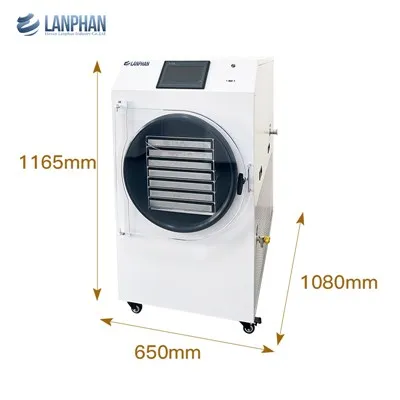
If you want to chat about your current setup, or learn more about how our rotary presses can help you get consistent surface roughness, reach out to our team. We’ll walk through your process, answer any questions, and help you figure out the best way to get your tablets looking (and performing) exactly as they should.
Autoclave References
- "Pharmaceutical Tablet Manufacturing: Process Engineering and Quality Attributes," 2nd Edition, Informa Healthcare, 2012.
- Rothe, H., "Surface Roughness of Compressed Tablets: Measurement, Causes, and Process Control," Journal of Pharmaceutical Sciences, vol. 98, no. 10, 2009, pp. 3581-3592.
- "Rotary Tablet Press Operation and Maintenance Best Practices," Equipment Guidelines for Pharmaceutical Manufacturing, ISPE, 2018.
Henan Lanphan Industry Co., Ltd.
We’re well-known as one of the leading rotary tablet press suppliers in China, featured by quality products and good price. Please rest assured to wholesale durable rotary tablet press for sale here from our factory. For more information, contact us now.
Address: Room 801, East Tower, Xiyuan Square, Zhongyuan District, Zhengzhou City, Henan Province
E-mail: lanphanindustry@lanphan.com
WebSite: https://www.lanphanindustry.com/
