Alright, let’s cut to the chase—if you’re here, you’re probably tired of dealing with piping connectors that leak, fail under pressure, or end up costing you way more than they should. As a piping connector supplier, I’ve seen firsthand how skipping proper integrity tests leads to late shipments, pissed-off clients, and even safety headaches no one wants to deal with. Over the last 10+ years of working with everything from oil and gas lines to food-grade plumbing, I’ve nailed down a practical, no-BS way to test connector integrity that doesn’t require a lab coat or a bunch of fancy jargon. Let’s walk through it step by step, like I’m talking to a fellow shop foreman or project manager who just wants to get this right the first time. Piping Connectors
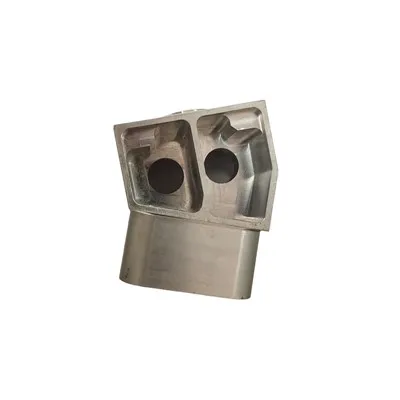
First off, let’s get one thing straight: testing integrity isn’t just about “checking for leaks.” It’s about making sure the connector will hold up to what it’s actually supposed to do—whether that’s moving water at 150 PSI in a commercial building or crude oil at 500 PSI in a pipeline. I’ve had clients come to me saying their old connectors failed because they tested them at room temp, but their actual job is in -20°F weather. That’s a rookie mistake. So before you even hook up a gauge, you need to match your test to the real-world conditions. Trust me, I learned that the hard way when a client’s connector cracked on a North Dakota site in winter—we’d tested at 70°F, and the poly material got brittle in the cold. Oops.
Now, let’s start with the basics: pre-test checks. You don’t just grab a connector and start pumping fluid. First, inspect it for obvious defects. I know, sounds simple, but I see so many people skip this. Grab the connector, run your hands along the threads, the flange faces, the seals—anywhere there’s a contact point. Look for scratches, dents, or mold flashing (that extra plastic/metal stuff from manufacturing). A tiny scratch on a seal groove can ruin a perfect seal, same with a dent that keeps two flanges from sitting flush. For threaded connectors, make sure the male and female threads match—no forcing a 1” NPT into a ¾” BSP, that’s a quick way to break something. If it’s a grooved connector, check that the grooves on the pipe end are clean and not banged up. I keep a little wire brush and a rag in my test cart for this exact reason—five minutes of cleaning can save hours of hassle later.
Next, choose your test method. This is where most people overcomplicate things. There are two main types: hydrostatic testing (using water) and pneumatic testing (using air or gas). Both have their place, and I’ll tell you when to use which. Hydro is my go-to for 90% of applications, especially for stationary piping systems (like factories, buildings, or storage tanks). Why? Water is incompressible, so if there’s a failure, it’s way less explosive than air. I’ve seen a pneumatic test go wrong once—connector blew, air shot out like a cannon, and it was scary. No one got hurt, but we definitely learned our lesson. For hydro, you need to pressure the system to 1.5 times the maximum working pressure the connector is rated for. For example, if a connector is rated for 200 PSI, you test it at 300 PSI. Hold that pressure for at least 10 minutes—longer for big systems, like 30 minutes for lines over 10 feet long. During that hold time, watch the pressure gauge. If it drops more than 5% (so from 300 to 285 PSI), you’ve got a leak. Don’t just go by pressure, though—do a visual check too. Walk along the joint, look for drips, mist, or even wet spots (sometimes leaks are slow and hard to see). If it’s a food-grade or potable water connector, make sure you use clean, non-toxic water for hydro testing—no random tap water with rust or chemicals that could contaminate the line.
Pneumatic testing is for when you can’t use water—like if the system has electronic parts that could short out, or if you’re testing a line that would be damaged by water. But here’s the rule: never use more than ½ the maximum working pressure. And always have a pressure relief valve set so it doesn’t go over that. Same hold time—10 to 30 minutes. But again, be careful. I always use a soapy water solution on the joints when doing pneumatic tests—any leak will bubble up, which is way easier to spot than just looking. And never stand directly over the joint during a pneumatic test—stand to the side, just in case something lets go. Safety first, always.
Wait, there’s another test I use for dynamic conditions—burst testing. This is for connectors that are going to see pressure spikes, like in hydraulic lines or pipelines with pressure surges. Burst testing is more involved, but it’s worth it for high-stakes jobs. You slowly increase the pressure until the connector fails, and you record the exact pressure where that happens. A good connector should burst at at least 4 times its working pressure. If it’s lower, that’s a dud, and we don’t sell those. I keep a log of every burst test we do in our warehouse—clients love seeing that, it builds trust. For example, last quarter we burst a 2” carbon steel connector at 1,200 PSI when it was rated for 300 PSI. That’s the kind of data that makes a project manager feel good.
Don’t forget about vacuum testing, either. If you’re dealing with systems that pull a vacuum—like refrigeration lines or vacuum pumps—standard pressure tests won’t cut it. For vacuum testing, you pull the system down to at least 29 inches of mercury (inHg) and hold it for 30 minutes. If the vacuum drops more than 1 inHg, you’ve got a leak. I use a handheld vacuum gauge for this, not just a basic pressure one. And same as before, check all joints with a soapy solution—bubbles mean air is getting in, which is a leak.
Now, what about connectors with seals, like O-rings or gaskets? Those are a common weak point. I always do a pre-test where I assemble the connector (correctly, of course—don’t cross-thread, don’t twist the O-ring) and hand-tighten first. Then, do a light pressure test at 25 PSI to check the seal before going full pressure. If it leaks there, you probably didn’t assemble it right, or the seal is damaged. O-rings are super sensitive to dust or oil—even a tiny spec of dirt can create a gap, so I wear gloves when handling them and keep them in a sealed container when not in use. Gaskets need to be the right size and material too—using a rubber gasket for a steam line is a disaster, no matter how good the connector is.
Let’s talk about common mistakes I see all the time. First, not accounting for temperature. Pressure gauges are calibrated for room temp, so if you’re testing in 100°F heat, the fluid expands, which can make the pressure gauge read higher than actual. To fix that, you need to correct for temperature. I use a quick formula: (pressure at test temp) = (room temp pressure) x (1 + (0.0002 x (test temp – 70°F))). Yeah, it’s math, but it takes 10 seconds, and it saves you from false positives. Second, rushing the hold time. People want to get done fast, so they only hold pressure for 2 minutes. That’s nothing—slow leaks take time to show up. I once had a client who rushed a test, missed a tiny leak, and their entire system was flooded 3 days later. They had to pay for repairs and delayed work—total nightmare. Third, reusing connectors. Even if a connector passed a test last week, if you’re using it in a new system, test it again. Seals get compressed, threads get dirty, you never know what happened to it between jobs.
As a supplier, I also have a responsibility here. We don’t just send connectors out the door without testing them in our warehouse first. Every batch gets a sample tested—we pick 10% of the lot, do hydro tests, check dimensions, and verify the rating. If any sample fails, we test more, and if we get multiple fails, we send the whole batch back to the manufacturer. No cutting corners, because I know if we send a bad connector, it reflects on us, not the client. I also send a test guide with every connector order—no fine print, just clear, step-by-step instructions that even a new apprentice can follow.
Wait, what about specialized connectors? Like flex connectors for vibration-heavy areas (near pumps or compressors)? Those need a different test—cyclic pressure testing. You cycle the pressure from 0 to working pressure over and over again, like 10,000 times, and check for leaks or cracks. That’s important because static tests don’t catch fatigue. I had a client in the mining industry who needed flex connectors that could handle constant pressure spikes—cyclic testing was non-negotiable for them. We do that in-house with our cyclic test rig, and it’s become a big selling point for us.
Now, when do you call in the pros? If you’re working on a huge project, like a refinery or a water treatment plant, it’s worth hiring a third-party testing company. They have certified equipment, know all the codes (like ASME B31 for piping), and can sign off on tests that are required for inspections. But for smaller jobs—like a residential plumbing upgrade or a small commercial line—you can do the testing yourself, as long as you follow the steps I laid out.
Let’s wrap this up. Testing piping connector integrity is all about being thorough, matching your test to the job, and not cutting corners. Start with a pre-inspection, pick the right test method (hydro for most, pneumatic only when needed, vacuum for low-pressure systems, cyclic for vibration), use the correct pressure and hold time, and watch for both pressure drops and visual leaks. If you’re not confident doing it yourself, that’s okay too—we’ve got a team that can help, or we can walk you through it over the phone.
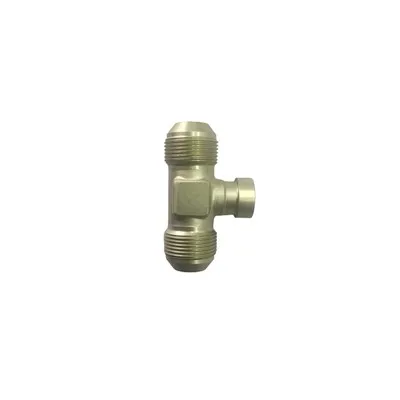
If you’re in the market for reliable piping connectors that actually pass these integrity tests, we’re your guys. We build every connector to handle real-world conditions, stand behind our testing, and can customize solutions for your specific project. No generic parts, no hidden fine print—just quality connectors and clear support. Hit us up to chat about your needs, and we’ll make sure you get exactly what works for you.
Mechanical Processing Components REFERENCES
ASME B31.3: Process Piping Code, American Society of Mechanical Engineers
Hydraulic Institute. Engineering Data Book, 3rd Edition
National Fire Protection Association (NFPA). 52: Standard for Compressed Gases and Cryogenic Fluids Code
Jiangxi Zhiyi Machinery Manufacturing Co., Ltd.
As one of the most professional piping connectors manufacturers and suppliers in China, we also support customized service. Please rest assured to wholesale bulk piping connectors in stock here from our factory. If you have any enquiry about quotation, please feel free to email us.
Address: Jiahai Industrial Park, No. 2799 Tianxiang Avenue, High-tech Zone, Nanchang City, Jiangxi Province.
E-mail: zgjxzy@163.com
WebSite: https://www.chinazhiyi.com/
