Hey there,
If you’ve ever grabbed a package from a smart locker at your apartment building, office, or local retail spot, you know how convenient they are. But if you run into a situation where you need to let someone else access that locker—like a roommate picking up your delivery while you’re out, or a coworker grabbing a stack of docs for a client—you might be asking, “Can I actually share access to a smart locker with someone else?” As a smart locker supplier, I get that question all the time, so let’s break this down clearly, no fancy jargon, just what works and what doesn’t right now. Smart Locker
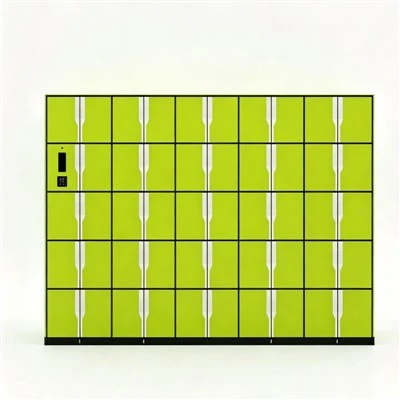
First off, let’s start with the basics: not all smart lockers are built the same, and neither are the sharing options. Most of the systems we sell (and I’ve seen this across other leading providers, too) are designed with multi-user scenarios in mind—because let’s be real, people don’t operate these lockers alone. But how you share access depends on what you’re using the locker for, whether it’s a residential unit, office storage, retail drop-off, or something else entirely. Let’s go through the most common use cases because that’s where the confusion happens.
For residential smart lockers—think the ones at your apartment complex or small building—sharing is super common. Say you ordered a new couch and it got dropped off while you were at work. You can tell your building’s management, and a lot of the lockers we provide have a feature where you can generate a temporary access code or a one-time QR code for someone else. Wait, no—wait, not a random code, because that’s a security risk. The good ones let you set an expiry: like, this code only works today between 2 PM and 6 PM, so your roommate can get it, but it won’t work tomorrow when it’s no longer needed. Some even let you send the code directly to their phone via text or the locker’s app, so they don’t have to memorize it or type it in wrong. I’ve had customers tell me this saved them when they had to leave town and their neighbor offered to pick up their packages—no awkward running back to get a code in person.
But here’s the catch with residential lockers: not all buildings enable this feature. Some older setups only let the building manager access the lockers directly, so you can’t generate a shareable code yourself. That’s usually a firmware update issue, which is easy to fix if you work with your locker provider. A lot of new builds are already set up for this, though, since it’s a big selling point for renters who don’t want to miss deliveries.
Now, for office smart lockers—these are the ones by the front desk, used for storing supplies, keys, or personal items. Sharing here is a little different because it’s not just a temporary pickup; sometimes you need to let someone use the locker for a longer period, like a contractor who needs to store tools for a week. Our office lockers have two sharing modes here: temporary single-use and recurring access. The recurring one is great for someone who works in the office part-time, like a temp or a visiting consultant. You can set their access to only work during business hours (9 AM to 5 PM, Mon-Fri) so they don’t have access after hours when the office is locked down. We also have a feature that lets you revoke access instantly if that person quits or stops working there—no more worrying about old codes floating around. That’s a big one for businesses, because security is way more important there than in a residential building.
Wait, but what if you’re using a smart locker for retail? Like, a small business that uses lockers to let customers pick up online orders, or a café that has lockers for people’s bags while they eat. Sharing access there is a bit trickier, because the locker is usually owned and operated by the business, not the customer. But some businesses will let a customer share their order pickup link with someone else—so if you order a gift from a local shop, you can send the pickup QR code to your sibling so they can grab it when you’re at work. Most retail lockers support this now, because it’s a way to reduce missed pickups, which saves the business money. The only time this doesn’t work is if the locker is linked to a specific app account—some big retail chains lock the pickup to the phone number used to order, so you can’t forward the code. That’s a choice they make to prevent fraud, which I get, but it’s frustrating when you want to share with someone else.
Now, let’s talk about the tech side, because a lot of people don’t realize how sharing works under the hood. Our smart lockers use a cloud-based system, so every access request is sent to our server, which verifies the code or QR before letting the locker open. That’s why temporary codes work—we set an expiry timestamp, and when someone tries to use it after that, the server says “no.” No random hacks there, because the code isn’t stored on the locker itself; it’s stored securely on the cloud. Some cheaper lockers might store the code locally, which is less safe, so if you’re looking to share, make sure you’re getting a locker with cloud-based management. That’s something to check when you’re shopping, because not all providers disclose that.
Another thing: biometric access (like fingerprint or facial recognition) — can you share that? Most of our lockers let you add multiple fingerprints or face scans, but again, with restrictions. You can add a coworker’s fingerprint for their temporary access, but you can also delete it whenever you want. We don’t let you add unlimited scans, though, because that would clutter the system. For residential use, that’s usually enough—you don’t need 10 different people accessing your locker. For larger setups, like a multi-tenant office with 50 lockers, we have admin dashboards that let you manage all access from one place, so you don’t have to add fingerprints one by one on each locker.
Wait, let’s address the elephant in the room: security concerns. A lot of people say, “If I share access, won’t someone get into my locker who shouldn’t?” The short answer is, if you use the right setup, no. Our access logs track every time someone opens a locker—who, when, and where. So if a code gets shared and used by someone else, you can see that in the log. That’s a huge safety net. For example, if you share a code with a contractor, you can check the log later to confirm they only opened it when they needed to, not at 2 AM when they shouldn’t have. Some of our competitors don’t offer that, so make sure you ask about access logs if security is a big deal for you.
Now, what about the cases where you can’t share access? There are a few. If the locker is for a one-time delivery that’s linked to your unique account (like a Amazon locker that requires your account login), you can’t really share that without giving someone your account info, which is not safe. Also, some lockers are in public spaces, like a train station, and they’re designed for single use—you just scan your ticket or phone to open, and there’s no way to generate a shareable code for someone else. That’s a design choice, not a tech limit, because public lockers are meant for people traveling alone, usually.
Let me also share a real customer story to make this concrete. A few months back, we installed our smart lockers at a small law firm. One of the lawyers needed to let a paralegal access a locked locker that held sensitive client documents for a case. They used our recurring access feature, set to only work during the paralegal’s shift, and revoked it the day after the case closed. No issues, no security breaches, and the paralegal could do their job without waiting for the lawyer to drop everything. Another customer, a teacher at a middle school, uses a residential-style locker for her class’s supplies, and shares a temporary code with a parent who helps organize materials after school. That’s worked perfectly for over a year.
Now, if you’re thinking about setting up shared access with a smart locker, here’s what to ask your provider (or us, if you’re looking): First, do you have cloud-based access management? That’s non-negotiable for safe sharing. Second, what are the sharing options—temporary codes, recurring access, multiple biometrics? Third, can I track access logs? Fourth, can I revoke access instantly if someone no longer needs it? If your provider can’t answer those clearly, you might want to look elsewhere.
Wait, also, I should mention that some people confuse “sharing access” with “giving someone full control over the locker.” A lot of our customers mix those up. If you share a temporary code, that person can only open the specific locker you assigned, not change the settings, delete access for other people, or move items in and out of other lockers. Full admin access is a separate permission, which only people who manage the lockers (like building managers or office admins) have. That’s an important distinction—you don’t want to accidentally give someone too much power.
So putting it all together: Yes, you can share access to a smart locker, but it depends on the locker type, your provider’s features, and what you need that access for. For most residential, office, and small retail use, it’s totally possible with secure, easy tools like temporary codes, scheduled access, and access logs. The key is picking a locker system that’s built for multi-user access, not just single-person use.
Now, if you’re a building manager, office admin, or small business owner looking to set up smart lockers with flexible sharing options, we’d be happy to walk you through our system and answer any questions about configuring access for your team or residents. We focus on making these tools simple, not complicated, so you don’t have to be a tech expert to manage shared access.

If you’re interested in learning more or starting a conversation about how smart lockers can work for your space, reach out to our team. We’re here to help you make the most of convenient, secure storage that fits your needs.
Smart Locker References:
- Smart Locker Security Best Practices, National Lock & Safe Association, 2023.
- Multi-User Access Solutions for Commercial Storage Facilities, International Facility Management Association, 2022.
- Cloud-Based Access Management for Smart Devices, IEEE Internet of Things Journal, 2021.
Hangzhou Dongjie Intelligent Technology Co., Ltd.
Hangzhou Dongjie Intelligent Technology Co., Ltd. is one of the most experienced smart locker manufacturers and suppliers in China, also supports customized service. Please feel free to wholesale durable smart locker made in China here from our factory. For quotation, contact us now.
Address: 1st Floor, Building 2, No. 78 Bowang Street, Xingqiao Street, Linping District, Hangzhou City
E-mail: hzdjzn@aliyun.com
WebSite: https://www.cndongjiesmart.com/
