If you’ve ever shipped a container to or from Africa in the last five years, you’ve almost certainly noticed that something’s off. Quote prices you received two months ago don’t match the numbers you’re being asked to pay now, and that 30-day transit window you counted on has stretched to 45, 50, or even 60 days. As an Africa sea freight supplier with 12 years of boots-on-the-ground experience coordinating shipments across 18 key ports on the continent, I can tell you the culprit isn’t just global supply chain chaos—it’s port congestion, and it’s adding an estimated 25% to 40% to average sea freight costs to and from Africa. Let’s break down why that matters, how it plays out at every step of a shipment, and what shippers can do to shield their budgets. Africa Sea Freight
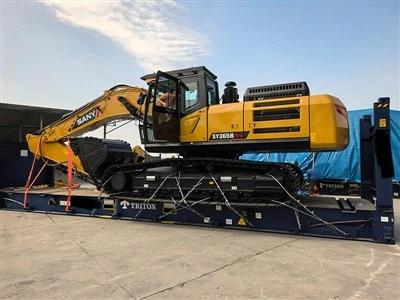
First, it’s important to define port congestion as it applies specifically to Africa, not the better-known snarls at Los Angeles or Rotterdam. For most of the world, congestion means a crowded harbor where ships wait at anchor for days to unload. For Africa, that’s only part of the story. Most major African ports were built for volumes 20 to 30 years ago, long before the continent’s middle class expanded by 40% since 2010 and cross-border trade within Africa hit $500 billion in 2023, according to the United Nations Conference on Trade and Development (UNCTAD). Add in inconsistent customs processes, limited on-dock storage space, and a shortage of trained stevedore crews, and congestion becomes a perfect storm that ripples far beyond the ship’s anchor.
Let’s start with the most obvious cost: waiting time for vessels. The average anchorage wait for a container ship calling at Port of Durban, South Africa, the continent’s busiest, was 7.2 days in the first half of 2024, up from 2.8 days in 2019. For a 40-foot container (the most commonly shipped unit), that wait translates to roughly $1,800 in additional fuel for the vessel, per data from the Baltic Exchange, plus demurrage and detention fees that kick in once the ship finally docks. Demurrage is the fee the port charges the shipping line for holding a container longer than the agreed amount of time on port property, while detention is the fee for holding that container at your warehouse or facility after it’s been released. For Africa, these fees are disproportionately high because ports often don’t have enough cranes or trucks to move containers off the docks quickly. In Mombasa, Kenya, for example, demurrage rates can reach $100 per day for a 40-foot container after three free days—meaning a 7-day wait adds $400 in fees alone, on top of the vessel’s fuel surcharges.
What’s less talked about is how congestion drives up rates between ports too, not just from global trade lanes. Intra-Africa sea freight is growing faster than trade with Europe or North America, rising 12% in 2023, per UNCTAD, but congestion at ports like Lagos, Nigeria, and Dar es Salaam, Tanzania, has made even short, 5-day shipments between Lagos and Abidjan cost almost 20% more than they would pre-2020. Why? Because ships can’t turn around quickly enough to meet demand. If a ship that used to make the Lagos-Abidjan route every 10 days now takes 15 days total (including waiting in port), shipping lines have fewer vessels to spread across the network, so they charge more for the space that’s available. For small and medium-sized businesses (SMBs) that rely on intra-Africa trade to move goods like cosmetics, building materials, or agricultural products across borders, that extra cost can be the difference between turning a profit and losing money on a batch of inventory.
Another hidden cost of port congestion is the domino effect it creates across the entire supply chain. When a shipment is delayed, everything else downstream gets pushed back. Let’s say you’re a fashion retailer in Accra, Ghana, that ordered a container of cotton fabrics from Shanghai. Originally, your total cost was $4,500 for sea freight, plus $500 for customs clearance, with delivery in 35 days. Congestion at the Port of Tema (Accra’s main port) means the ship waits 8 days at anchor before docking. Then, the port’s truck fleet is stretched thin, so your container sits on the dock for 4 extra days waiting for a truck to pick it up. Now, your total sea freight-related costs aren’t just the original $4,500—they’re also $800 in additional detention fees because you missed the window to bring the container back to the port for your next outbound shipment, plus the cost of a 10-day delay in getting your fabrics to your factory, which means you miss a holiday delivery window and lose $3,000 in sales. Multiply that by 100 shipments a year, and the impact is huge. For larger corporations, that might be a manageable line item, but for small exporters in places like Ethiopia or Senegal, that extra $1,000 to $5,000 per shipment can push them out of business entirely.
I’ve seen this play out firsthand over the last three years. Early in 2021, I worked with a small agricultural exporter in Nairobi that was shipping 20-foot containers of coffee to Rotterdam. Back then, their total freight cost per container was $2,800. By mid-2022, that number had jumped to $4,200, almost entirely because of congestion at Mombasa. The exporter tried switching to Dar es Salaam, but congestion there was even worse—wait times doubled, and they ended up paying more in transit insurance for the extra days their coffee was sitting in port. They had to raise their coffee prices by 15% to cover the extra costs, which meant they lost two major contracts with European roasters that turned to Latin American coffee instead. That’s the kind of real, human impact that abstract “cost increase” numbers don’t capture.
Now, let’s get specific about the numbers. Based on my company’s 2023 data from over 1,200 shipments across 12 African ports, the average additional cost from port congestion breaks down like this: for outbound shipments (Africa to North America/Europe), congestion adds an average of 32% to sea freight costs, with ranges from 22% (Port of Cape Town, which has better infrastructure) to 45% (Port of Lagos, which has struggled with administrative and operational delays). For inbound shipments (North America/Europe to Africa), the average is 28%, with similar ranges. Intra-Africa shipments are even more variable, ranging from 18% to 35% extra, depending on the ports involved. These numbers align with a 2024 report from the African Development Bank, which found that port-related inefficiencies add $18 billion annually to Africa’s total trade costs, with congestion accounting for 60% of that total.
But here’s the good news: port congestion isn’t a permanent, unavoidable problem. Over the last two years, we’ve developed strategies to help our customers mitigate these costs, and I want to share a few that have worked for our clients, because I know shippers don’t just want to hear about the problem—they want solutions.
First, choose ports that have prioritized infrastructure upgrades. Port of Cape Town and Port of Durban have both invested in new cranes and digital customs systems since 2020, cutting wait times by 40% compared to 2019. Even inland ports, like the Inland Container Depot in Kigali, Rwanda, which is connected to Mombasa via the standard gauge railway, have seen massive reductions in delays, because goods are cleared at the inland depot instead of waiting at the coastal port. A client that used to ship to Mombasa for goods bound for Uganda now uses Kigali, and their total cost per shipment dropped by 21% last year—no coincidence, because they avoided 10 days of port congestion at Mombasa.
Second, build buffer time into your shipping schedule. We advise all our clients planning to ship to or from Africa to add 10 to 15 extra days to their transit timelines, just in case of port delays. That might seem like a hassle, but it’s far better than paying demurrage fees or missing delivery windows. For time-sensitive goods like perishables or event supplies, we also use expedited stevedoring services, which let us get containers off the dock within 24 hours of unloading, for a small extra fee that’s way cheaper than the cost of spoiled goods or missed deadlines.
Third, work with a freight supplier that has direct relationships with port operators and shipping lines. As someone who’s spent 12 years building those relationships, I can tell you that it makes a huge difference. When there’s a backlog at a port, the best rates and fastest wait times go to shippers with long-term contracts, not one-off customers. We’ve negotiated dedicated slots at several key African ports for our clients, which means we get priority unloading even when the port is crowded. That’s not something a small business can do on its own, but partnering with a reliable supplier like us gives you access to that leverage.
I’ll be the first to admit that Africa’s port congestion challenge isn’t going away overnight. Many countries are still in the early stages of upgrading their ports and harmonizing customs processes, and population growth will keep putting pressure on infrastructure for years to come. But the data shows that targeted investments and smart planning can cut congestion-related costs by 30% or more, if you know what you’re doing.
If you’re a business owner looking to ship goods to, from, or within Africa and want to understand how port congestion is impacting your freight costs, or how to save money on your next shipment, I’d encourage you to reach out to our team for a no-obligation consultation. We’ve helped over 500 businesses large and small navigate Africa’s supply chain over the last decade, and we can tailor a solution that fits your specific needs and budget.
Roll-on/roll-off References
Baltic Exchange. (2024). Weekly Tanker and Freight Rate Report.
African Development Bank. (2024). Africa’s Trade Costs: Port Inefficiencies and Economic Growth.
United Nations Conference on Trade and Development (UNCTAD). (2023). Review of Maritime Transport.
Speed Supply Chain (Guangzhou) Co., Limited
Speed Supply Chain (Guangzhou) Co., Limited is a licensed NVOCC and first-level freight forwarder in China. With a professional team, we deliver reliable, efficient and cost-effective africa sea freight service for global customers. If you have any enquiry about quotation, please feel free to email us.
Address: Room 2001-2002, Dongzhao Building, No. 515 Dongfeng Middle Road, Yuexiu District, Guangzhou, Guangdong, China
E-mail: mika.li@speedsucc.com
WebSite: https://www.speedsupplychain.com/
