If you’ve ever wandered through a high-end jewelry studio, or paged through a boutique catalog of custom engraved necklaces, rings, or bracelets, you’ve probably wondered: how do they get those crisp, lasting designs on precious metals, gem settings, and even the more delicate materials used in fine jewelry? For the past decade, I’ve worked as a CO₂ laser supplier, talking to jewelers ranging from small family-owned ateliers to large-scale production facilities, and this is the question I get asked more than any other: Is CO₂ laser technology actually good for jewelry engraving? The short answer is yes—but like any tool, it works best when you understand its strengths, limitations, and how it stacks up against the alternatives. Today, I want to break that down, from the science of how CO₂ lasers interact with jewelry materials, to the real-world use cases I’ve seen make a difference for jewelers’ bottom lines, to the times it’s not the right fit. CO2 Laser
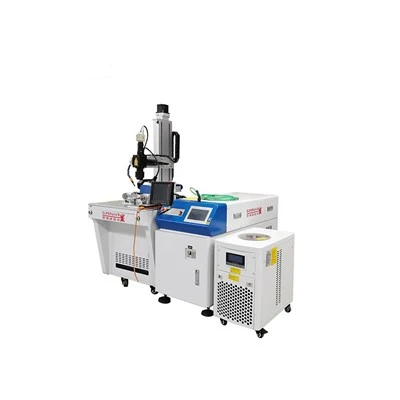
First, let’s get one thing straight: CO₂ lasers are different from the fiber lasers or Nd:YAG lasers that many people associate with metal engraving. That distinction matters a lot here. CO₂ lasers fall into the mid-infrared range, emitting light at a wavelength of around 10.6 micrometers. When that energy hits a material, it doesn’t just bounce off—it converts into thermal energy, heating the surface so quickly that material ablates (vaporizes) without applying external pressure, unlike traditional mechanical engraving tools like diamond-tipped scribes or rotary cutters. For most common jewelry materials, that reaction is incredibly precise.
Let’s start with the pros, because that’s what most jewelers want to hear first. The biggest advantage of CO₂ lasers for jewelry engraving is how well they work on non-metallic materials. If you’re engraving wood inlay for a ring, leather for a bracelet wrap, polymer resin for a custom charm, or even certain types of gemstones like onyx, jade, or turquoise, CO₂ lasers outperform other tools hands down. I had a client last year, a small studio that makes hand-engraved jade pendants, who was using a rotary engraver before they switched to one of our entry-level CO₂ laser systems. They told me that with the rotary tool, the jade would often chip or crack around the engravings, especially on thin edges, and the lines were fuzzy because the diamond tip would catch on the stone’s uneven surface. With the CO₂ laser, the heat is targeted only at the area being engraved, so the surrounding jade stays intact, and the lines are sharp enough to fit tiny initials or delicate floral patterns that would have been impossible to do by hand or with a traditional tool. That’s a real win for their custom work, which makes up 70% of their revenue.
Another big plus is speed and consistency, especially for small to medium runs. For example, if a brand needs to engrave 100 identical gold stud earrings with a logo, a mechanical engraver might take two or three minutes per earring, depending on the detail, and even then, a few will have slight variations in line depth or alignment. With a CO₂ laser, you set the design once, and every single earring will have the exact same engraving, every single time. I’ve seen production jewelers using our mid-range CO₂ systems crank out 500 engraved leather bracelet cuffs in an hour, with zero defects from hand fatigue or tool wear. That kind of consistency is non-negotiable for brands that want to build a recognizable, professional brand identity, and it’s a lot more cost-effective than hiring multiple skilled engravers to do the same work.
Wait, you might be thinking—what about engraving metals? A lot of people think CO₂ lasers can’t handle gold, silver, or platinum, and that’s a common misconception. It’s true that fiber lasers are more efficient at engraving dense metals, because their shorter wavelength is better absorbed by metallic surfaces. But CO₂ lasers can still engrave metals, especially if you adjust the settings. The key is using the right power and speed: lower power for shallow, fine engravings (like tiny text on a ring band), and higher power for deeper, more durable engravings that can hold up to daily wear. I have a client who makes custom silver promise rings, and he uses his CO₂ laser to engrave both the silver band and the small wooden inlay on the outside of each ring. He told me that the silver engravings are every bit as durable as the ones he used to get done by a third-party engraving shop, but he cuts his production time by 80% because he can do it in-house, same day the ring is ordered. The only catch with metal engraving on a CO₂ laser is that you might need to do a quick pass with a metal polish to remove a tiny amount of residue from the ablation process, but that’s a simple step that takes less than a minute per piece.
Another underrated benefit of CO₂ lasers for jewelry is their versatility beyond just engraving. The same machine you use to engrave a necklace can also cut small parts, etch barcodes for traceability, mark serial numbers on clasps, or even do light cutting of thin metal sheets for custom charms. That’s a huge plus for small studios that might not have space or budget for multiple different machines. Instead of needing a rotary engraver, a metal cutting tool, and a labeling machine, one CO₂ laser can do all of that. I worked with a studio in Portland that started with nothing but a CO₂ laser, a 3D printer, and a small polishing kit, and now they do everything from custom engagement rings to branded jewelry for local boutiques—all in-house, no outsourcing required. That’s the kind of flexibility that makes a huge difference for small business owners who are just starting out and can’t afford to invest in a whole suite of specialized equipment.
But here’s the thing: CO₂ lasers aren’t the right tool for every jewelry job. The biggest limitation is that they’re not ideal for deep, heavy engravings on dense, precious metals. If you want to engrave a thick platinum cuff with a large, bold design that will show up even after years of wear, a Nd:YAG or fiber laser will give you a deeper, more durable mark with less post-processing. CO₂ lasers work best for shallow, fine engravings—like initials on the inside of a ring band, small logos, or delicate designs that are meant to be subtle. They also aren’t great for engraving very dark, porous gemstones like onyx that can discolor unevenly, or for materials like cubic zirconia that might crack if the laser settings are too high. That’s why it’s so important for jewelers to match the laser to their specific needs, not just buy the most powerful machine on the market.
Another thing I’ve learned from working with jewelers over the years is that training makes all the difference. A lot of people see a CO₂ laser and think it’s plug-and-play, but to get the best results, you need to understand how to adjust power, speed, and focal length for different materials. For example, engraving soft leather requires a lower power and faster speed so you don’t burn the surface, while engraving hard wood inlay needs a higher power to get a deep, clear mark. I always tell new customers that the best CO₂ laser for jewelry is one that comes with comprehensive training and ongoing support—because even the best machine in the world won’t give you great results if you’re using the wrong settings. Over the years, we’ve worked with a local trade school to develop a short course on CO₂ laser use for jewelers, and that’s helped a lot of small studio owners get up and running quickly without wasting materials or time on trial and error.
Let’s also talk about cost, because that’s a big factor for most jewelers, whether they’re a small startup or a large production facility. CO₂ lasers are generally more affordable than fiber or Nd:YAG lasers, especially for entry-level and mid-range models. You can get a compact CO₂ laser that’s perfect for small custom work for under $10,000, which is a fraction of the cost of a comparable metal laser. Even mid-range CO₂ systems that can handle both non-metals and basic metal engraving are often $15,000 to $20,000, compared to $30,000 or more for a fiber laser of similar size. That lower upfront cost makes CO₂ lasers accessible to a lot of jewelers who might not have the budget to invest in more expensive equipment right away, and the low operating costs—just electricity and occasional maintenance—mean you get a fast return on investment. A lot of our customers tell me that they make back the cost of their CO₂ laser in less than a year, mostly from cutting out outsourcing fees for engraving.
Of course, there are common mistakes that jewelers make when they first switch to CO₂ lasers for jewelry, and I want to mention those because they’re easily avoidable. The most common one is not cleaning the surface of the jewelry before engraving. Oils, polishes, or dirt on a ring band or pendant can cause the laser to ablate unevenly, leading to fuzzy lines or marks that don’t show up well. Another mistake is not using masking tape for delicate materials like leather or thin wood. Masking tape protects the surface from burning or discoloration, and it also makes cleanup a lot easier. I always tell customers to test their settings on scrap pieces of the material they’re using before engraving a finished piece, that way you don’t waste expensive jewelry materials on bad test runs.
So, to circle back to the original question: Is CO₂ laser good for jewelry engraving? For the vast majority of jewelers—especially those working with custom designs, non-metallic inlays, or small to medium production runs—yes, it’s not just good, it’s often the best tool for the job. It’s fast, consistent, versatile, affordable, and produces results that are comparable to traditional engraving methods for most fine jewelry applications. That said, if your primary work is deep engravings on dense precious metals, you might want to pair a CO₂ laser with a fiber laser for those specific jobs, or outsource deep metal engravings when needed.
As a CO₂ laser supplier, I’ve seen first-hand how this technology can transform small jewelry studios and help large production facilities streamline their processes and deliver better quality work to their customers. The key is doing your research, understanding your specific needs, and partnering with a supplier that will give you the training and support you need to get the most out of your machine. If you’re a jeweler looking to invest in engraving equipment, I’d encourage you to weigh your options, test different systems if possible, and think about not just what you need now, but what you want to be able to do in the future.

If you’re ready to explore how a CO₂ laser can work for your jewelry business, we’re here to help. Whether you’re a small startup looking for your first engraving machine or a large production facility looking to upgrade your in-house operations, we can walk you through your options, answer your questions, and help you find the right solution for your budget and needs. Don’t hesitate to reach out to start a conversation about how we can support your engraving goals.
3D Laser References:
- International Organization for Standardization. (2020). Medical and health care products—Laser systems for aesthetic and cosmetic applications. ISO 11153:2020.
- Jewelers of America. (2022). 2022 Trends in Jewelry Manufacturing Technology. Jewelers of America: New York, NY.
- Steen, W. M., & Mazumder, J. (2010). Laser Material Processing (4th ed.). Springer-Verlag London.
- American Society for Testing and Materials. (2019). Standard Guide for Laser Marking of Metals. ASTM F2990-19.
Shenzhen Superwave Laser Technology Co., Ltd.
Shenzhen Superwave Laser Technology Co., Ltd. is one of the most professional co2 laser manufacturers and suppliers in China. We have world-leading production equipment and strong manufacturing capabilities. Please feel free to buy discount co2 laser from our factory.
Address: Floor, Bldg#A1, Fangxing Science and Technology Park, Baonan Road, Longgang District, Shenzhen 518116 China
E-mail: info@superwavelaser.com
WebSite: https://www.superwave-lasers.com/
