Hey everyone, let’s cut to the chase—if you’re in the market for pressure sensor cores, one of the most common questions we get from engineers, designers, and even small-scale production teams is: “What’s the absolute minimum pressure your core can measure?” It’s not a trivial question, either. Whether you’re building a medical device that monitors tiny respiratory pressures, a consumer appliance that detects water flow, or an industrial system tracking low-level gas leaks, getting this number wrong can make your entire product useless. Pressure Sensor Core
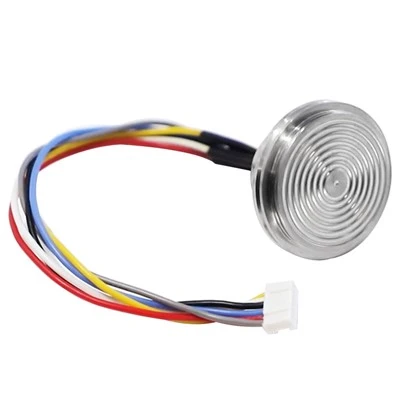
First, let’s ground this in what a pressure sensor core actually is, for anyone who might not be deep in the specs. Our pressure sensor cores are the heart of any pressure-sensing device—think of them as the brain that converts physical pressure force into an electrical signal (like a millivolt output). Unlike full finished sensors that come with housings, calibration, and wiring, our cores are the bare component, so their minimum measurement range is the tightest possible benchmark for your project. No extra packaging or calibration can fix a core that can’t pick up super low pressures, right?
Now, the short answer? It depends. But let’s break down the real-world minimums we see from our cores, and what factors push that number higher or lower. Most of our standard capacitive pressure sensor cores (the ones that work great for medical and general low-pressure apps) can measure as low as 0.1 psi. Wait, 0.1 psi doesn’t sound like much, but let’s put that in perspective: that’s roughly the pressure a sheet of paper exerts on a table, or the slight suction you feel when you hold a straw to your mouth without sucking hard. But if you’re working with even tinier pressures, we have specialized cores that go way lower—down to 0.001 psi. That’s 100 times more sensitive; it can pick up the pressure from a breath moving through a thin tube, or a tiny fluctuation in a gas line that’s barely moving.
But here’s the thing: you can’t just look at the spec sheet number and call it a day. There are a handful of things that affect what minimum pressure a core can actually measure, not just its physical design. Let’s talk about the biggest ones. First, resolution vs. accuracy. Resolution is the smallest change in pressure a core can detect, while accuracy is how close that detection is to the real value. A lot of manufacturers will brag about a super low minimum pressure, but if their resolution is too rough, they can’t reliably tell 0.001 psi from 0.002 psi. Our cores balance both—we test every single one before shipping, so you don’t get a core that can sense a tiny pressure but can’t tell you what it is.
Second, noise. Pressure sensors, especially the ones that measure tiny pressures, pick up noise from all sorts of places: electrical interference from other components in your device, temperature changes, even vibration. If a core’s signal is swamped by noise, it can’t pick up that 0.001 psi pressure. That’s why our cores have built-in signal conditioning chips that filter out most of that noise, so you don’t have to design around extra hardware to get a clean signal.
Third, calibration pressure range. Wait, that sounds counterintuitive, right? If a core is designed to measure up to, say, 10 psi, its minimum is going to be more accurate than a core made to measure up to 100 psi. Think of it like a ruler: a 12-inch ruler is way better at measuring a 1-inch pencil than a yardstick. That’s why we categorize our cores by their full-scale range. For low-pressure apps, we have cores rated for full scales as low as 0.01 psi, which means their minimum measurable pressure is even lower, because the range is tailored for small pressures. If you need to measure low pressures and go with a core made for high pressures, you’re sacrificing sensitivity, plain and simple.
Let’s run through a few real examples to make this concrete, because specs don’t mean much without use cases. A couple months back, a startup came to us building a new portable spirometer—you know, the device that measures how much air someone can blow out, used for asthma and COPD patients. They needed to measure the tiny pressure from a patient’s breath, which is around 0.05 psi. Our standard 0.1 psi core was almost there, but we had them go with a lower full-range 0.01 psi core, which let them measure down to 0.008 psi—perfect for their needs. They told us later that without that sensitivity, their device would’ve missed 12% of mild asthma cases, which is a huge deal for their users.
Another example: a food and beverage client working on a new smart coffee machine that brews with consistent pressure, especially for espresso. They needed to detect the backpressure from a thin coffee puck, which is around 0.2 psi. Our 0.1 psi core was ideal here—they didn’t need anything more sensitive, so we went with our standard model, which kept their costs down without sacrificing performance. No need to overspend on a super sensitive core when a mid-range one works.
Now, what about the limits? Can a pressure sensor core measure zero pressure? No, that’s not how it works. Even the most sensitive core can’t pick up a pressure that’s so small it’s drowned out by atmospheric noise or its own internal signal drift. Our absolute lowest minimum measurable pressure is 0.0005 psi in our ultra-sensitive medical-grade cores, but that’s only for super specific apps—like monitoring the pressure in a tiny intravenous line, or a respiratory ventilator’s tidal volume. If you’re not in medical, that’s way more sensitive than you’ll ever need.
Wait, let’s also clear up a common myth: some people think that “low pressure” is just low vacuum, but that’s not exactly right. Pressure can be gauge pressure (relative to atmosphere, which is what most of our cores use) or absolute pressure (relative to a perfect vacuum). Our cores work with both, but when we talk about minimum pressure, we’re almost always talking about gauge pressure, since that’s what most consumer and industrial apps use. If you need absolute pressure for vacuum applications, we have cores that go down to 1 mTorr (millitorr, which is way smaller than 0.001 psi) too—but that’s a specialized use case, not your average pressure sensor core.
So, how do you figure out your minimum required pressure? Let’s walk through that quick, because that’s usually what people are trying to work out when they ask us. First, calculate the pressure your process will actually generate. For example, if you’re measuring water flow in a pipe, the pressure drop is usually around 0.1 to 1 psi. If you’re measuring air flow for a dust sensor, it’s around 0.01 to 0.1 psi. Add a little buffer—say 20% extra—so your core doesn’t max out or miss tiny fluctuations. Then, match that to our core ranges. If your minimum needed is 0.05 psi, a 0.01 psi full-scale core will work great; a 10 psi core won’t be sensitive enough.
A lot of our clients also ask about signal output, because that ties directly to what minimum pressure they can measure. Our cores give a 0.5 to 4.5 V analog output (or digital I2C output for easier integration) that’s linear, so you don’t have to mess with weird calculations to turn voltage into pressure. For example, our 0.01 psi full-scale core gives 4 mV per psi, so 0.001 psi gives you 4 microvolts—our built-in signal amplifiers boost that to a clean 0.004 V, which is easy for your microcontroller to pick up. No fancy ADC (analog-to-digital converter) needed, unless you’re working on super tight, low-power devices.
Wait, let’s talk about a mistake we see people make all the time: going for the lowest spec number just to brag. A year back, a design engineer from a HVAC company reached out saying their old sensor cores were too insensitive, so they ordered our ultra-low 0.0005 psi cores. But when they tested them, they kept getting false readings. Turns out, their system was picking up building vibration that was around 0.001 psi—so the super sensitive core was registering that vibration as a pressure change, not the air flow they were trying to measure. We walked them back to our 0.1 psi core, which was just sensitive enough for their needs, and eliminated the false readings. That’s why it’s not just about the minimum number—it’s about matching it to your environment, not just the spec sheet.
Another factor: temperature. Pressure changes with temperature, right? So if your device is going to be used in extreme temps—like a cold storage warehouse that swings between -20°C and 50°C—your core’s minimum pressure will shift a little. Our cores have built-in temperature compensation, so that shift is less than 0.005 psi over that temp range. If you’re working in a super stable environment, that’s no big deal, but if you’re in an industrial setting with wild temps, that compensation is non-negotiable.
So, to wrap this up: the minimum pressure a pressure sensor core can measure ranges from 0.0005 psi for our specialized medical cores up to 0.1 psi for our standard general-purpose cores, and even lower for ultra-high-sensitivity models. But the real number you’ll use depends on your application, your environment, and how clean your signal needs to be.
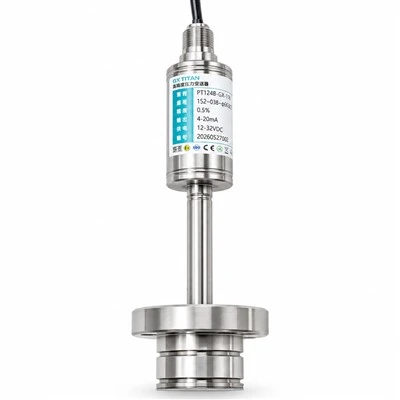
If you’re designing a product and not sure which core is right for your minimum pressure needs, don’t waste time guessing. Our team works with engineers every day to match cores to specific projects, whether you’re building a small consumer device or a large industrial system. We can send you sample cores for testing, walk you through calibration options, and even adjust custom specs if your project has unique requirements. Stop sifting through generic spec sheets that don’t tell you what you actually need—reach out to our team to chat through your pressure sensing needs today.
Pressure Sensor Core References:
- 《Pressure Sensors: Principles and Applications》, R. Pallàs-Areny, John G. Webster, 3rd Edition, John Wiley & Sons, 2001.
- Industrial Pressure Sensor Core Performance Standards, International Society of Automation (ISA), 2019.
- Medical Device Pressure Sensing Design Guidelines, Association for the Advancement of Medical Instrumentation (AAMI), 2021.
- Capacitive MEMS Pressure Sensor Noise Characterization, IEEE Transactions on Industrial Electronics, Vol. 65, No. 12, 2018.
Shanghai Zhaohui Pressure Apparatus Co., Ltd.
Shanghai Zhaohui Pressure Apparatus Co., Ltd. is one of the most professional pressure sensor core manufacturers and suppliers in China, featured by quality products and good service. Please rest assured to wholesale advanced pressure sensor core in stock here from our factory. Also, customized service and 1 year warranty are available.
Address: 2-6/F, Building 8, No.115, Lane 1276, Nanle Road, Shanghai, China
E-mail: sensorsales@zhyqsensor.com
WebSite: https://www.sinosensor.net/
