If you’ve ever stood in a home solar installation and stared at rows of panels and a wall-mounted battery, wondering if they were made to work together, you’re not alone. As a supplier of special solar panels, I get this question every single day: Are our panels compatible with home batteries? It’s a fair one, too—because solar power isn’t just about generating electricity anymore; it’s about storing it for cloudy days, outages, or when utility rates spike. The answer isn’t a simple yes or no, but breaking it down gives you clarity that will help build a more resilient, efficient home energy system. Special Solar Panel

Let’s start with the basics: What makes solar panels work with batteries at all? At its core, solar panels generate direct current (DC) electricity when sunlight hits their cells. Home batteries, almost universally, store DC power too—until you need to use it, at which point an inverter converts DC to alternating current (AC) for your appliances. For years, this meant compatibility hinged on matching two key things: the voltage of your panels and the voltage rating of your battery, plus the type of inverter you used.
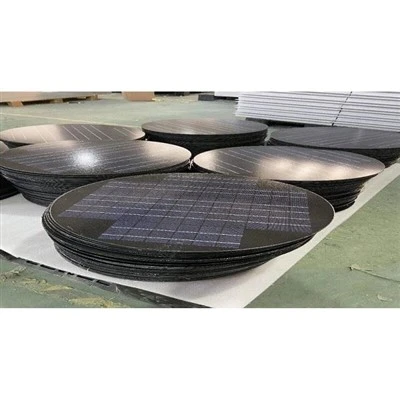
But here’s where special solar panels enter the conversation. Unlike standard panels that work on a one-size-fits-all model, special panels are designed for specific use cases: high-altitude locations where thin air boosts sunlight intensity, shingled designs that perform better in partial shade, bifacial panels that absorb light from both sides, or thin-film panels that work well in low-light conditions. These designs have unique electrical characteristics—often adjustable voltage, higher tolerance for variable input, or built-in microinverters—that change how they pair with home batteries.
Let’s take a common scenario: a homeowner in the Pacific Northwest, where overcast days can make standard panels underperform. They choose our bifacial special panels, which capture light reflected off their dark roof and surrounding grass, boosting output by up to 15% compared to standard panels. Can they pair these with a Tesla Powerwall or LG Chem home battery? The short answer is yes, but they need to adjust the setup, not just plug in components. Unlike standard panels, which work best with a string inverter that groups multiple panels into one electrical string, bifacial panels pair seamlessly with microinverters—small inverters mounted on each panel—that convert DC to AC right at the source. This means the power going to the battery is already AC-compatible, eliminating the need for a separate large central inverter. That’s a compatibility win right there, because most home batteries are built to work with microinverter setups now.
Another example: a homeowner with a off-grid cabin, who chooses our rugged, temperature-resistant special panels designed for extreme cold. Standard panels lose efficiency when temperatures drop below freezing, but our special panels maintain 90% of their output even in -20°F weather. Can they use these with a home battery bank that stores energy for the cabin’s lights and fridge? Absolutely, but they need to match the panel’s open-circuit voltage (Voc) to the battery’s charge controller. Most home battery systems come with built-in charge controllers, but if the panels have a Voc higher than the controller’s maximum rating (a common quirk of special panels built for cold climates), you’ll need a voltage regulator to bridge the gap. Skip that step, and you risk damaging both the panels and the battery—so compatibility here isn’t inherent, it’s about matching specs, not just brands.
A lot of people assume that special panels only work with specific battery brands, but that’s a myth I see spread online all the time. Early home battery systems were proprietary, forcing you to use the battery brand that made your inverter—but modern systems are open-source, which means they can work with almost any panel, as long as the electrical specs align. The key difference with special panels is that you often have to tell your installer to check three things before pairing:
First, check the panel’s maximum power point (MPP) range. The MPP is the sweet spot where a panel generates the most power, and it shifts based on light and temperature. Special panels, optimized for variable conditions, have a wider MPP range than standard panels. Your battery’s charge controller needs to handle that wider range—if it can only work with a narrow MPP, your special panel won’t perform at full capacity. For example, our shingled special panels have an MPP range of 250V to 450V, vs. a standard panel’s 300V to 400V; so a battery with a controller that tops out at 400V will struggle to pull power from the shingled panels unless you wire a few of them in series to stay within the range.
Second, check for DC-coupled vs. AC-coupled setups. This is the biggest compatibility factor most homeowners miss. DC-coupled systems connect panels directly to the battery, with one inverter for the whole setup. AC-coupled systems connect panels to the grid or home’s AC power, then convert that power to DC for the battery. Special panels work with both, but each has pros and cons for your setup. DC-coupled is more efficient (losing less power to conversion), which is a big deal for special panels that generate less total power in low-light. AC-coupled is more flexible if you want to add a battery later, without replacing your existing panels or inverter. Our team often recommends DC-coupled for off-grid homes with our thin-film special panels, which perform better in low light and lose less power when converted directly to battery storage.
Third, consider future expansion. A lot of homeowners add panels later, so if you’re pairing special panels with a battery, make sure the system has room to add more panels down the line. Our modular special panels are designed to work with most home battery expansion kits, as long as the charge controller’s capacity is large enough. That’s a compatibility feature I prioritize as a supplier—because I don’t want a customer to have to replace their entire system just because they add a few more panels a year from now.
Now, let’s talk about common mistakes I see when people pair special panels and home batteries. Last year, a customer in Arizona bought our high-efficiency special panels designed for desert climates, then tried to pair them with a budget home battery he found online. The battery’s charge controller couldn’t handle the high voltage of the desert panels, so the battery only charged to 60% capacity, even on sunny days. He ended up having to swap the battery for one with a higher voltage rating, and it cost him an extra $1,200. That’s avoidable—you don’t have to splurge on the most expensive battery, but you do have to match the panel’s specs to the battery’s capabilities.
Another mistake: assuming all special panels are the same. A bifacial panel is different from a shingled panel, which is different from a high-altitude thin-film. Each has unique specs, so compatibility isn’t a one-size-fits-all answer. That’s why I always tell customers to work with an installer who’s familiar with the type of special panels they’re choosing, not just a general solar installer. Our team often connects customers with vetted installers who have experience pairing our panels with all major home battery brands, so they don’t have to guess.
The good news here is that compatibility is improving all the time. Home battery manufacturers are starting to build their systems to support a wider range of panel specs, including the unique traits of special panels. The U.S. Department of Energy’s Solar Energy Technologies Office recently released a report noting that open-source home energy systems, which work with almost any panel or battery, are now 20% more common than they were three years ago. That means if you’re choosing special panels for your home, you have more options than ever to pair them with a battery that fits your budget and needs.
Let’s wrap this up with a real example of a successful pairing: A family in Minnesota with a 1,800-square-foot home, who chose our cold-weather special panels. They paired them with a Powerwall 2, and their installer adjusted the setup to use a charge controller that matched the panels’ 18V Voc. Last winter, when temperatures dropped to -15°F, their standard panels in the neighborhood only generated 40% of their summer output, but our special panels generated 75%—and the battery stored enough power to keep their heat running during a 12-hour outage. That’s the payoff of getting compatibility right: not just saving money on energy bills, but having power when you need it most.
If you’re ready to build a system with special solar panels and a home battery, the first step is to talk to a specialist who can walk you through your specific setup. As a supplier of special solar panels, we work with homeowners, installers, and contractors to make sure our products pair seamlessly with a wide range of home batteries, no matter your location or energy needs. Don’t let compatibility concerns hold you back—reach out to us to discuss your project, and we’ll help you find the right match for your home energy goals.
DIY Solar Panels References
International Energy Agency. (2023). Solar Photovoltaic and Energy Storage Compatibility: Global Trends and Best Practices.
U.S. Department of Energy Solar Energy Technologies Office. (2022). Open-Source Home Energy Systems: Compatibility and Performance.
National Renewable Energy Laboratory. (2021). Specialized Solar Panels: Electrical Characteristics and Pairing with Energy Storage Systems.
Ningbo Xufeng Solar Energy Co., Ltd.
As one of the most professional special solar panel suppliers in China, our products have good reputation in the market. Please rest assured to buy bulk premium special solar panel in stock here from our factory. For price consultation, contact us.
Address: No.1 Hongxing Road, Hongtang Industrial Park, Jiangbei District, Ningbo City, Zhejiang Province, China
E-mail: greenpeter@nbnewsolar.com
WebSite: https://www.nb-newsolar.com/
