If you’ve ever spent time putting together a DIY solar setup, or even just shopped around for gear for your tiny off-grid cabin, you’ve probably stumbled on MPPT charge controllers. They’re the unsung middlemen of your solar system—they take the wild, variable DC power your panels spit out, condition it, and send safe, steady power to your batteries. As someone who’s been in the game selling these things for a few years now, one question I get all the time is: “How long do these things actually last?” I get it—you drop a few hundred bucks on a controller, and you want to make sure it’s not gonna crap out on you six months after your warranty ends. Let’s break this down like we chat over a workshop coffee, no stuffy jargon (okay, maybe a tiny bit, but I’ll explain it). Mppt Charge Controller
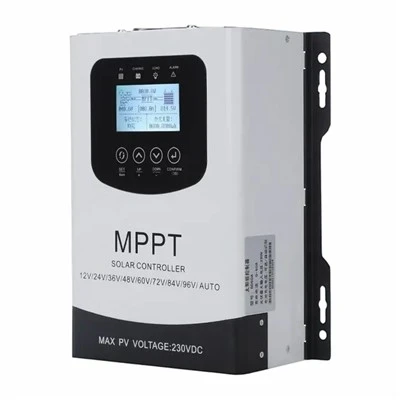
First off, let’s get one thing straight: MPPT controllers aren’t like your phone battery that dies in two years, or a solar panel that can barely hold power after 15. These are built to be the workhorses of your system, but their lifespan depends on way more than just how good the parts are. I’ve seen cheap no-name controllers from Amazon croak in 18 months, and I’ve seen mid-tier units that’ve been running strong for 12 years with zero issues. The average I’ve seen in the field, across all the ones I’ve sold and supported? It’s somewhere between 10 and 15 years. That’s not a random number, by the way—there’s actual data from field tests and component manufacturers behind that.
Let’s start with the core parts, because that’s where durability lives. An MPPT controller is basically a circuit board with a whole bunch of heavy-duty components inside: MOSFETs (these are the switches that move power around), capacitors (they smooth out the power so it doesn’t spike), fuses, and a microcontroller that runs all the logic. The brand of these parts matters a ton. The cheap controllers use generic capacitors that dry out in 3-5 years, especially if they’re sitting in a hot attic or unventilated closet. The good ones—like the ones we sell—use Japanese or Taiwanese capacitors rated for 10,000+ hours of operation at 85°C. To put that in perspective, that’s like running your controller 24/7 for over a year, and they’ll still be good. That’s a huge difference. The MOSFETs? Cheap ones can burn out if there’s a power surge, but quality ones are rated for way more voltage and current spikes than your average solar system will ever throw at them.
But here’s the thing—most of the time, controllers don’t die because the parts fail out of nowhere. They die because of how you installed and used them. I can’t tell you how many times a customer comes to me saying their controller is dead, and when I ask “did you ground it right?” or “is it mounted in a cool place?” they go “wait, I’m supposed to do that?” Mounting is a big one. If you stick your controller in a box in your garage that gets up to 120°F in summer, that’s like leaving your laptop in a closed car in August—parts will wear out way faster. MPPT controllers don’t like extreme heat. Most are rated for an ambient operating temp of -20°C to 60°C (-4°F to 140°F), but pushing them to the upper end of that range all the time cuts their lifespan in half. I always tell customers to mount them in a well-ventilated area, not in direct sun, and if it’s going to be in a super hot place, get a unit with a built-in fan. That extra $20 is gonna save you a controller in 5 years.
Then there’s overloading. A lot of new solar users look at their panel array and their battery bank, and they size their controller way too small. Like, if you have four 100W panels that put out 400W total, and a 100Ah battery, a 30A controller is enough—but if you cram 600W of panels and a 200Ah battery into a 30A controller, that controller is working overtime 24/7, never getting a break. That’s a fast track to a dead unit. I see this all the time with people who upgrade their panels a few years after installing their system and forget to upgrade the controller. The old controller can’t handle the extra power, so it overheats, the capacitors dry out early, and boom—you’re shopping for a new controller way sooner than you should. Bad wiring is another big one. If your wire gauge is too thin, you get voltage drop, which makes the controller work harder to push power, leading to overheating. Or if your connections are loose, you get arcing, which can fry the MOSFETs or the circuit board. It sounds basic, but so many people skip the basics and wonder why their controller died.
Warranties are another thing worth talking about here. You’ll see controllers with 2-year warranties, 5-year, even 10-year. The 2-year ones are almost always the cheap stuff—they’re built to last until the warranty runs out, basically. A 5-year warranty means the manufacturer stands behind their parts enough to say it shouldn’t die in that time, and a 10-year warranty is for controllers built with the good components. That’s not a guarantee it will die at year 11, but it’s a good indicator of how long they expect it to last. I’ve sold controllers with 5-year warranties that are still running strong 8 years later, no issues.
Wait, what about environmental factors? If you’re putting your controller on a sailboat that’s saltwater all the time, that’s way harder on it than a setup in a dry home. Salt air is corrosive, so even if it’s mounted in a good place, the metal connections can rust over time, and the circuit board can get corroded if it’s not sealed properly. We make marine-grade controllers for that exact reason—they have sealed enclosures and corrosion-resistant parts, and those last a little longer than the regular ones, because they’re built for harsh conditions. I’ve had a marine controller on a sailboat in the Caribbean for 9 years, and it’s still going strong, no issues. That’s a testament to good parts and being built for the environment.
Another thing that’s not talked about much: how you use your system. If you’re always drawing a lot of power—like you run a big AC unit, multiple fridges, power tools off your off-grid setup—your controller is working way harder than someone who just runs a few LED lights and a laptop. Constant high load shortens the lifespan, same as it would for any electric device. On the flip side, if your system is lightly used, the controller doesn’t have to work as hard, so it can last longer. I have a customer with a tiny 200W setup for a weekend cabin, and his controller has been running for 13 years, no issues. He barely uses it, so it’s always working within its sweet spot.
Now, let’s talk about common failure points, because that’s what actually kills these things. The number one failure I see in controllers is bad capacitors, like I mentioned earlier. When capacitors dry out, they can’t smooth the power anymore, so you get spikes that fry other parts. That’s usually from heat. The second most common failure is power surges—from lightning, or even when your generator kicks on to charge your batteries. If you don’t have surge protection built in, a big spike can blow out the MOSFETs in a matter of seconds. That’s why all the controllers we sell have built-in surge protection, and we always recommend adding a whole-home surge protector too, just for extra peace of mind. The third thing I see is loose connections or wire issues, like I said before—people don’t tighten their terminals enough, so they get arcing, which burns up the connections on the circuit board.
So putting all this together: if you get a quality MPPT controller, install it right, size it correctly, mount it in a cool, ventilated spot, and don’t abuse your system, you can easily get 10-15 years out of it. I’ve had customers come back to buy a new panel array or upgrade their battery bank, and their original controller is still running, no issues. On the flip side, if you skimp on the controller, mount it in a hot attic, overload it, or skip surge protection, you might be replacing it in 3-5 years. That’s the tradeoff—spend a bit more on a good controller up front, and it’ll save you money in the long run.

Wait, one more thing that people sometimes ask: can you extend the lifespan of your MPPT controller? Yeah, there are a few simple things you can do. First, clean it once a year—just wipe down the outside, make sure the vents aren’t clogged with dust or spider webs. Second, check your connections every 6 months—make sure they’re tight, no corrosion. Third, if you live in a super hot area, add a small fan to keep it cool, or even mount it outside in the shade if that’s an option. Fourth, size your controller correctly when you set up your system, and if you upgrade your panels or batteries a few years down the line, make sure your controller can handle the new load, or upgrade the controller at the same time. That’s way cheaper than dealing with a dead controller and a fried battery.
Vehicle Battery Charger At the end of the day, MPPT controllers aren’t the cheapest part of your solar setup, but they’re definitely one of the most important. They’re the bridge between your panels and your batteries, and if they die, your whole system stops working. That’s why we put so much care into building ours—we use only the top components, test every unit before it leaves our warehouse, and offer warranties that back up how long we expect them to last. If you’re setting up a new solar system, or looking to replace your old controller, and you have questions about sizing, installation, or how to make yours last, feel free to reach out. We’re here to help you pick the right controller for your setup, so you don’t have to worry about it crapping out on you a few years down the line.
References
- Solar Energy International. (2021). “MPPT Charge Controller Durability and Field Performance”. Renewable Energy Training Manual.
- International Electrotechnical Commission (IEC). (2019). “Standard for Photovoltaic System Charge Controllers (IEC 62109-1)”.
- Bloom, J. (2020). “Lifespan of Solar Balance of System Components”. Solar Power World Magazine.
- Taipei Times Tech. (2022). “Component Selection and Longevity of Off-Grid Solar Controllers”.
Huizhou Qiangfeng Power Technology Co., Ltd.
As one of the most professional mppt charge controller manufacturers and suppliers in China, our products have good reputation in the market. We warmly welcome you to buy customized mppt charge controller made in China here from our factory. If you have any enquiry about quotation, please feel free to email us.
Address: No.28, Hu’ao Avenue, Shiwan Town, Boluo County, Huizhou City, Guangdong Province
E-mail: Komco@Jinlidianqi.cn
WebSite: https://www.qfautobatterychargers.com/
