If you’ve ever sourced electronic stamping parts for industrial, automotive, aerospace, or even consumer electronics projects, you’ve likely faced the same question when designing for harsh environments: Will these tiny, precision-stamped components hold up when temperatures swing to extremes? As an electronic stamping parts supplier with 18 years in this space, I’ve seen firsthand how a part that works flawlessly in a climate-controlled lab can fail spectacularly when exposed to -60°C arctic night temperatures or 200°C under-hood engine bays. It’s not enough to just stamp metal to tight tolerances—you have to engineer for temperature extremes, and that means understanding how every material choice, stamping process, and post-production step impacts performance when conditions go beyond standard specs. Electronic Stamping Parts
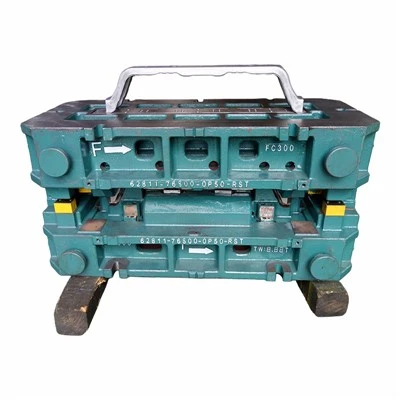
Let’s start with the basics: what makes electronic stamping parts different from generic stamped metal? These are precision components—think contact pins, connectors, spring terminals, lead frames, and shielding brackets—designed to fit into electronics where even a 0.001mm deviation can cause a short circuit or signal interference. When these parts operate in extreme temperatures, they face two core challenges: thermal expansion mismatch and material degradation. Thermal expansion is the big one here; every metal has a coefficient of thermal expansion (CTE), meaning it expands when heated and contracts when cooled. If a stamped copper contact, for example, is paired with a plastic housing in a device that goes from -40°C to 150°C, the copper expands at a different rate than the plastic. Over hundreds of thermal cycles, that mismatch can cause the contact to loosen, leading to intermittent connections, or crack, leading to total failure. I remember a customer a few years back who made a batch of telematics modules for over-the-road trucks. Their initial prototype used bare brass stamping parts, and within a year, 12% of the units were failing due to cracked contacts. The problem? Brass has a CTE 22% higher than the nylon-based plastic housing they used. We re-stamped the contacts from a copper-iron alloy with a lower CTE, matched to the housing material, and failure rates dropped to less than 0.5%—a fix that saved them millions in warranty claims. That’s the kind of real-world problem we solve every day, and it starts with material selection tailored to temperature extremes.
Speaking of materials, not all stamping metals are created equal when it comes to extreme temperatures. Let’s break down the most common options and their performance in hot and cold environments. First, copper alloys are the workhorses of electronic stamping parts, thanks to their excellent conductivity. Pure copper is great for room temperature, but it softens when heated above 150°C, losing its spring temper—critical for terminals that need to maintain consistent pressure on connectors. For high-heat applications, we turn to copper-iron, copper-nickel, and copper-chromium alloys. Copper-chromium, for example, retains 90% of its tensile strength at 250°C, making it ideal for under-hood sensors or industrial power supplies that run hot. On the cold end, copper actually becomes more ductile at sub-zero temperatures, which is a plus for parts that need to flex in arctic conditions—but wait, there’s a catch: pure copper can suffer from stress corrosion cracking when paired with certain sulfur-based environments at temperatures below -30°C. That’s why for aerospace applications operating at -55°C, we use copper-nickel-tin alloys, which are corrosion-resistant and maintain their ductility without cracking under load.
Then there’s stainless steel, another go-to for harsh environments. Austenitic stainless steel (like 302 or 304) is popular for its corrosion resistance, but it has lower conductivity than copper alloys, so we only use it for components that don’t carry high currents—like shielding brackets or structural clips. For extreme temperatures, martensitic stainless steel (410) can handle up to 500°C, making it perfect for exhaust system electronics, while precipitation-hardened stainless steel (17-4 PH) retains its strength at both -100°C and 300°C, which is why it’s used in satellite components. The big mistake many new designers make is assuming stainless steel is always the best for heat; it’s not—its conductivity is so low that it can cause heat buildup in high-current paths, leading to premature failure. We always map the application’s temperature range, current load, and environmental exposure before recommending a material, which is why our long-term clients come back to us time and again.
Next, the stamping process itself impacts how a part performs in extreme temperatures. Precision stamping isn’t just cutting metal into shape—it’s controlling the grain structure, work hardening, and residual stress in the part, all of which affect temperature resistance. When we stamp a part, we apply intense pressure to shape the metal, which work-hardens the edges and surface areas. That work hardening is great for strength at room temperature, but in extreme cold, over-worked metal can become brittle. For example, a terminal stamped from pure copper with too much work hardening will crack when bent repeatedly at -40°C, while a part with controlled work hardening (achieved by using the right stamping force and annealing at intermediate steps) will flex without damage. Annealing is a key post-stamping step for extreme temperature parts: it relieves residual stress that can cause warping or cracking during thermal cycling. Last year, we had a customer in the medical device space who needed stamped parts for a cryogenic surgical tool that operates at -80°C. They initially ordered parts from a low-cost supplier that skipped the final annealing step, and 30% of the parts cracked during thermal testing. We reprocessed the same material, adding a low-temperature anneal after stamping to relieve internal stress, and every part passed their -80°C to 20°C thermal cycle test. That’s the difference between a generic stamping supplier and one that understands process science.
Coating and plating are another critical factor for extreme temperature performance, and not just for corrosion—they also impact how a part holds up to thermal cycling. Tin plating is common for low-cost parts, but tin has a melting point of only 232°C, so it will melt or degrade in applications above that, leaving the base metal exposed and vulnerable to corrosion. For high-heat applications, we use gold-nickel plating or palladium-nickel plating. Gold-nickel can handle temperatures up to 400°C, and the nickel underlayer prevents gold diffusion into the base copper, which would cause brittleness over thermal cycles. For cold environments, tin actually works fine if it’s a pure tin plate, but we have to be careful with tin whiskers—tiny crystal-like growths that can cause short circuits. In sub-zero temperatures, tin contracts more than copper, which can accelerate whisker growth. To combat that, we use tin-lead plating (where allowed by RoHS) or add a nickel barrier layer that stops whiskers from forming. For aerospace parts, we often use hard gold plating, which is more durable than soft gold and resists wear in both hot and cold environments. I’ve seen a customer’s satellite connector fail because they used soft gold plating—when the satellite passed through the sun’s shadow, the cold contracted the connector, and the soft gold wore down, causing a signal loss. Swapping to hard gold plating fixed that issue, and the part has been performing flawlessly for 5 years now.
Thermal cycling testing is non-negotiable for any electronic stamping parts that will see extreme temperatures, and as a supplier, we don’t just rely on our customers’ tests—we run our own rigorous in-house testing. Our environmental chamber can cycle temperatures from -70°C to 250°C, with humidity control and vibration simulation, so we can test parts for thousands of thermal cycles before they even leave our facility. A few months ago, we had a client in the renewable energy sector who needed stamped bus bars for a wind turbine power converter. The bus bars operate between -40°C and 180°C, and they required no degradation in conductivity or strength after 10,000 thermal cycles. We tested three different material options: copper-iron, copper-chromium, and aluminum. Aluminum is lighter, but it has a higher CTE and lower strength, so it failed after 3,000 cycles. Copper-iron passed 7,000 cycles, but copper-chromium passed all 10,000, and also had higher conductivity, which reduced the turbine’s energy loss. We supplied 50,000 parts, and the client has reported zero failures in the field, which is exactly the kind of result we pride ourselves on delivering.
There’s also a common misconception that electronic stamping parts only matter in extreme niche applications—aerospace, military, deep-sea equipment, high-performance automotive. But that’s not true anymore. Consumer electronics are pushing into extreme environments too: ruggedized laptops for construction sites that go from hot deserts to cold mountain tops, outdoor security cameras that operate in -50°C winters, electric vehicle batteries that reach 200°C during fast charging. A friend who works for an EV startup told me that their initial battery pack design used generic stamping parts, and during winter testing in northern Sweden, 8% of the contact pins failed because they weren’t engineered for sub-zero temperatures. We worked with their team to re-design the pins using a copper-tin alloy with matched CTE to the battery housing, and adjusted the stamping process to add a stress-relief anneal. Now their battery packs pass all cold-weather tests, and they’ve scaled that design to 100,000 units. That’s the impact good electronic stamping parts can have on even everyday tech.
So what should you look for when sourcing electronic stamping parts for extreme temperatures? First, don’t just share your part dimensions—share the full application specs: temperature range, number of thermal cycles, current load, environmental exposure (moisture, chemicals, corrosion), and any regulatory requirements (like RoHS for consumer electronics or aerospace standards). A good supplier will ask these questions, not just quote the lowest price. Second, verify that the supplier uses material testing: they should be able to provide CTE data, tensile strength at temperature, and corrosion resistance test results for the materials they use. Third, ask about their stamping process controls: do they use annealing to relieve stress? Do they have tight tolerances on plating thickness? Fourth, demand pre-production testing: any part intended for extreme temperatures should be tested in an environmental chamber before full production runs.
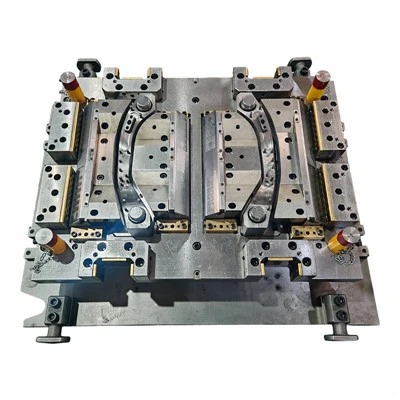
At the end of the day, electronic stamping parts that perform in extreme temperatures aren’t just about metal and machines—they’re about understanding how those parts interact with the world they’re placed in. I’ve been in this industry long enough to know that cutting corners on material, process, or testing leads to field failures, warranty costs, and frustrated customers. That’s why every part we stamp goes through a multi-step quality check: material certification, in-process dimensional testing, post-stamping stress checks, and full environmental testing for any extreme temperature application. If you’re designing a project that will face harsh conditions—whether it’s an EV battery, a satellite component, a medical device, or an outdoor sensor—and you need electronic stamping parts that will hold up, we can work with you to engineer, prototype, and produce parts tailored to your exact temperature requirements. Don’t let a small stamping part be the weak link in your design. Reach out to our team to discuss your project, share your specs, and get a solution that’s built to perform in even the most extreme temperatures.
Custom Stamping Die References
- ASM International. (2020). Materials Selection for Electronic Applications. ASM Handbook, Volume 21: Materials Selection and Design, 1-28.
- DIN EN 60068-2-1. (2019). Environmental testing – Part 2-1: Tests – Test A: Cold. German Institute for Standardization.
- Metal Powder Industries Federation. (2021). Precision Stamping of Electrical Components: Process and Performance Characteristics. MPIF Journal of Metal Stamping, 45(3), 12-21.
- NASA Goddard Space Flight Center. (2018). Material Selection Guide for Space Electronics: Temperature and Environmental Effects. NASA Technical Report GSFC-STD-7000.
- SAE International. (2022). Temperature Resistance of Stamped Electrical Contacts for Automotive Applications. SAE J1608.
Dongguan Changdong Tool & Die Co., Ltd.
With abundant experience, we are one of the most reliable electronic stamping parts manufacturers and suppliers in China. Please feel free to buy advanced electronic stamping parts made in China here from our factory. Good service and quality products are available.
Address: No.56-B, Fumin South Road, Dalang Town, Dongguan City, Guangdong Province, China
E-mail: sales@cdstamping.com
WebSite: https://www.metalstampingdie.com/
