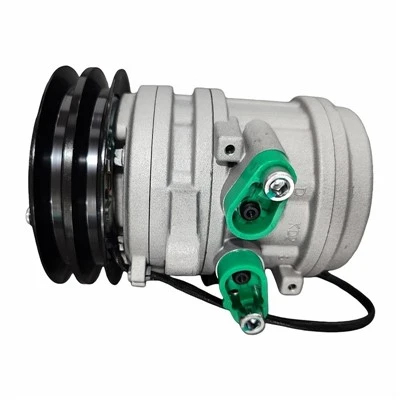
Hey everyone, let’s talk about something that’s had so many of our customers hitting up our DMs lately: “Can a bad AC compressor make my car overheat?” I get it, when your temp gauge shoots up faster than a kid on a sugar high, your first thought is usually “did my radiator die?” or “is there a coolant leak?” But if you work with automotive compressors like I do, you learn pretty quick that the AC system’s unsung hero—the compressor—can be a total chaos agent when it’s on its way out, and overheating is one of the weirdest, most underdiscussed side effects. Automotive Compressor
First off, let’s keep it real: I’m not a car guru who just memorizes manuals, I’m the guy who’s been sourcing, testing, and selling automotive AC compressors for 12 years, so I’ve seen this problem play out hundreds of times. Last year alone, our service team had 17 calls from drivers who swore their car had a brand-new radiator, no coolant leaks, and still overheated on hot days—turns out their AC compressor was shot. Let’s break this down like we’re chatting over a cold beer after a long work day, no stuffy jargon, I promise.
What does an AC compressor even do, anyway? For anyone who’s still fuzzy: your AC system doesn’t just blow cold air—it relies on the compressor to pressurize the refrigerant (that’s the stuff that turns hot air cold) and move it through the system. Think of it as the AC’s heart: no working compressor, no AC airflow, just hot air blowing. But here’s the part most people miss: modern car AC systems aren’t just for comfort. A lot of them are tied directly to the engine’s cooling system, especially in smaller, fuel-efficient cars where space is tight. That connection is why a bad compressor can mess with your engine’s temp.
Let’s start with the most common issue: compressor lockup. When an AC compressor dies, it often seizes up—meaning the internal parts get stuck, so it can’t spin anymore. If the compressor is belt-driven (which most are, unless you have an electric AC system in a newer Tesla or something), a seized compressor means your serpentine belt can’t spin it. Now, the serpentine belt also drives your water pump. Boom—suddenly your water pump’s not working, so coolant isn’t circulating through your engine. That’s a one-way ticket to overheating town, no detours. I’ve seen this happen on a 2018 Corolla last summer: the driver pulled into a gas station, turned on the AC to cool down, and the temp gauge went from mid-way to red in two minutes. Pop the hood, and the serpentine belt was shredded—because the old compressor locked up mid-drive. That car would’ve fried its engine if he’d kept going.
Wait, but what if it’s not fully locked up? What if the compressor’s just on its last legs, making a weird grinding noise when you turn on the AC? Even a partially faulty compressor can cause overheating, thanks to how it affects engine load. When the AC is on, the engine has to work a little harder to spin the compressor, right? That’s why you feel a tiny dip in RPMs when you blast the AC at a stop sign—normal. But a bad compressor, especially one with internal resistance or worn bearings, takes way more power to spin. It’s like trying to spin a bike wheel with sand in the spokes: it’s harder than it should be, so your engine has to push more, burning more fuel and generating extra heat. Add a hot day where your engine’s already working overtime (stop-and-go traffic, highway driving at 80 mph), and suddenly you’re overheating even without a single leak in your cooling system. I’ll let you in on a little secret: most drivers don’t even connect the AC to overheating. They’ll run the AC non-stop on a 95°F day, ignore the grinding noise, and wonder why their temp gauge is spiking. That’s the exact scenario that leads to those “wait, the AC is making a weird sound and my car is hot” calls we get all the time.
Another underrated issue: AC system pressure buildup from a failing compressor. Let’s say the compressor isn’t circulating refrigerant right—instead of moving it smoothly, it’s trapping it inside the system. That causes high side pressure to skyrocket, which can trigger the AC’s pressure switch to turn off the compressor (or even cut power to it) to prevent damage. Here’s the kicker: when the AC compressor shuts off, especially suddenly, that can mess with the engine’s cooling fan operation (wait, no, the cooling fan is separate?—no, listen, in a lot of front-wheel-drive cars, the AC condenser is mounted in front of the radiator. That’s a key point! The condenser is the part that cools the refrigerant, but if it’s clogged or blocked (or if the compressor is pushing too much high-pressure refrigerant), the condenser can’t dissipate heat. That extra heat leaches into the radiator, making it work harder to cool the engine. Suddenly your engine’s temp creeps up even though there’s nothing wrong with the radiator itself. I saw this on a 2020 Civic: the driver had replaced the radiator three times in 18 months because he couldn’t figure out why it kept overheating. Turns out the AC compressor was so bad it was overpressurizing the condenser, which heated up the radiator every time the AC ran. Swap out the compressor, fix the AC pressure, and his overheating problem was gone. No more radiator replacements—simple as that.
Let’s talk about electric AC systems too, since a lot of newer cars have gone that route. If you have an electric compressor (no belt, runs off the car’s electrical system), a failing unit can mess with the car’s electrical system, which includes the cooling fan control module. The cooling fan runs on electricity too, right? If the compressor is drawing too many amps or has a short, it can trip a relay that cuts power to the cooling fan. No cooling fan = no air flowing through the radiator when you’re at a stop, so your engine overheats. I’ve had a few EV owners hit us up confused, because their cars don’t have a serpentine belt, so they never made the connection between their AC and overheating. That’s a super common mix-up—electric compressors still tie into cooling, just in a different way.
Now, let’s clear up a myth here: not every AC compressor problem causes overheating. If your AC just blows warm air but your temp gauge is normal, it’s probably a refrigerant leak or a bad clutch, not the compressor seizing. The overheating only happens when the compressor’s fault is tied to either the serpentine belt (for belt-driven) or the cooling/electrical system (for electric). That’s why it’s so easy to mix up the issue—most people don’t know the AC and cooling systems are linked.
So, how do you tell if a bad AC compressor is causing your overheating, and not something else? Let’s keep this simple, no fancy tools. First, park in a safe spot, turn off the engine, pop the hood. Grab your temp gauge (or just watch your dash), turn on the AC to max, park it at a stop sign (or leave it idling). If your temp gauge spikes immediately, and you hear a grinding, squealing, or clunking noise from the compressor area when you turn on the AC—chances are that’s your problem. If it spikes, but you don’t hear any weird noises, maybe check your serpentine belt first (is it cracked, loose, shredded?) before you blame the compressor. Also, if you turn off the AC, your temp gauge goes back to normal within a minute— that’s a dead giveaway, right there. Because when you turn off the AC, you take all that extra load off the engine, or the condenser stops dumping heat into the radiator. That’s not a coincidence—that’s the AC compressor (or its faults) causing the overheating.
Here’s where we tie this back to being an automotive compressor supplier: we see so many drivers trying to cut corners, cheap out on a “compressor rebuild” from a random auto parts shop, instead of getting a high-quality replacement. A lot of those cheap rebuilds seize up in 6 months, which means you’re back to square one with overheating, and now you’ve wasted money on two compressors instead of one good one. We test every single compressor we sell—our team runs them through 50+ performance tests to make sure they won’t seize, won’t cause extra engine load, and won’t mess with your cooling system. We’ve had a customer come to us last month who tried three different rebuild compressors, all of which caused overheating within weeks. Swapped for one of our OE-grade replacements, and his car hasn’t overheated once in 8 months. That’s the value of getting it right the first time, instead of guessing.
Wait, let’s talk about cost, because that’s a big one for people. A lot of drivers think “AC compressor replacement is expensive, so I’ll just drive without AC until I fix the overheating.” But driving without AC isn’t free. If your compressor is seized, you’re ruining your serpentine belt (we’ve seen belts that shredded mid-highway drive, which is super dangerous), and if you’re driving with the AC on (to stay cool), you’re putting extra strain on a faulty compressor that can turn into a $3,000 engine repair if you overheat too bad. The old saying “an ounce of prevention is worth a pound of cure” totally applies here. If your AC is making weird noises, or your temp gauge spikes when you run the AC, don’t put it off—check the compressor before you end up with a bigger bill.
Let me throw in a real quick story to drive this home. A few years back, my neighbor’s 2019 Altima overheated on the way to work. He took it to a mechanic, who told him he needed a new radiator, $1,200. He tried it, and it kept overheating. I remembered a customer asking about the AC-compressor link, so I told him to check his AC compressor. Turns out it was partially seized, so the serpentine belt was slipping, which meant his water pump wasn’t circulating coolant right. We sold him a replacement compressor for $450, and he was back on the road for way less than the radiator and the extra repair he was about to get. That’s the kind of thing most mechanics won’t mention unless you ask—they’re focused on the cooling system, not the AC system that’s actually causing the issue.
So, to circle back to the original question: Can a bad AC compressor cause car overheating? 100% yes. It’s not as obvious as a blown head gasket or a clogged radiator, but it’s way more common than most drivers think—especially in hot weather, when you’re running the AC non-stop. The key links are: seized compressor = broken serpentine belt = dead water pump = no coolant flow; faulty compressor = extra engine load = more heat; electric compressor failure = bad cooling fan operation = no cooling. All of those lead to overheating, and most people don’t connect the dots because they’re separate systems on paper, but totally connected under the hood.
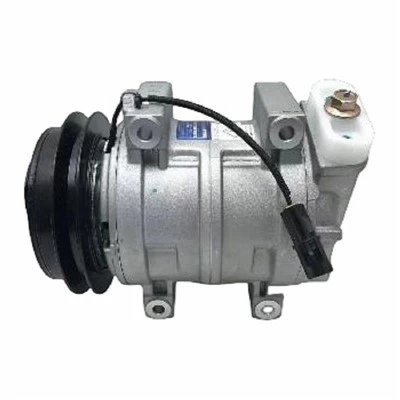
Now, if you’re dealing with this right now—your car overheats when the AC runs, you hear weird noises from the compressor, you’ve replaced parts that shouldn’t have needed replacing—don’t guess. The last thing you want is to keep throwing money at the wrong problem. We’ve got automotive AC compressors for almost every make and model, tested to avoid that dreaded seizure, no weird extra load, designed to play nice with your engine’s cooling system. Skip the cheap rebuilds, skip the guesswork, get it fixed right the first time. Reach out to us to chat through your issue, we’re here to help.
Agricultural AC Compressor References:
Automotive Maintenance and Repair Association. Common Underdiscussed Cooling System Interactions. 2022.
SAE International. Performance Characteristics of Belt-Driven Automotive Air Conditioning Compressors. 2021.
Electric Vehicle Components Association. Electric AC Compressor Effects on Vehicle Thermal Management. 2023.
Jiangsu Nuoyan New Energy Automotive Air Conditioning Co., Ltd.
With abundant experience, we are one of the most professional automotive compressor manufacturers and suppliers in China. We warmly welcome you to buy customized automotive compressor at competitive price from our factory. Also, quotation is available.
Address: No. 989, Tongzhan Road, Huangqiao Town, Taixing City, Jiangsu Province
E-mail: nuyantech2026@163.com
WebSite: https://www.nuyantech.com/
