If you’ve ever walked through the narrow backstreets of a busy urban neighborhood, a rural community with unpaved lanes, or a crowded market where four-wheeled ambulances can barely squeeze through, you’ve probably seen them: the bright, zipping three-wheeled vehicles that dart through traffic to reach people in need faster. As a supplier of these ambulance tricycles, I get asked this question at least once a week: Do your ambulance tricycles come with emergency kits? It’s such a simple question, but the answer goes way beyond just yes or no—because the emergency kit in an ambulance tricycle isn’t the same as the one in a standard ambulance, and getting it right is what can turn a minor emergency into a positive outcome, or even save a life. Ambulance Tricycle
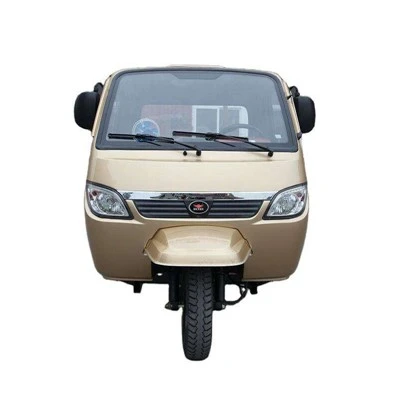
First, let’s break down why ambulance tricycles are even a thing. I started in this business 12 years ago, back when I was working as a part-time EMT in a city with a dense downtown core where one-way streets and parked cars made full-size ambulances take 20 minutes to get to calls that a tricycle could reach in 5. I saw so many patients waiting longer than they should because their transport was stuck in traffic, especially during rush hour or at big events like weekend markets or festivals. Four-wheeled ambulances are built for highways and wide city streets, but they’re useless when you need to get to a patient in a alley, a hillside village, or a slum where roads are too narrow for a standard vehicle. That’s where ambulance tricycles fill a critical gap. They’re lightweight, maneuverable, fuel-efficient, and most importantly, fast. But speed only matters if you have the tools to help once you get there, which is why the emergency kit in each of our tricycles is non-negotiable.
When someone asks me about our emergency kits, I don’t just rattle off a list of supplies. I explain that every kit is customized for the specific environments our tricycles operate in. For example, we sell a lot of tricycles to regions in Southeast Asia, where monsoon seasons turn dirt roads into muddy, waterlogged paths, and to parts of Africa where heat and dust are constant. We don’t use generic kits that work for a suburban ambulance in North America or Europe. Those kits are loaded with bulky items like defibrillators, large surgical tools, and oxygen tanks that are too heavy for a tricycle to carry, and unnecessary for the most common emergencies we see in low-resource areas.
Our kits are divided into two main categories: the “immediate response kit” that’s stored in the front of the tricycle, right next to the driver/EMT seat, and the “expedition kit” that’s stored in a waterproof compartment under the cargo area for longer transports or more remote areas. The immediate response kit is the one used in the first 10 minutes after arriving on scene, which is the golden window for most emergencies. Let’s get specific about what’s in it, because this isn’t just guesswork—we worked with local EMTs and public health officials in every region we sell to to build these kits.
First, basic life support items. That includes adult and pediatric CPR masks with one-way valves—pediatric supplies are often overlooked, but in many of the areas we serve, kids make up 30% of emergency patients. We also have a range of manually operated resuscitators (Ambu bags) because electric ones can fail in areas with unreliable power, and they’re lighter. For bleeding control, we use combat gauze, which is way more effective than regular gauze for deep wounds, and compression bandages of different sizes, plus a roll of elastic bandage for sprains and fractures. We also carry a variety of sterile dressings, antiseptic wipes, and gloves in both medium and large sizes—again, pediatric-sized gloves are non-negotiable here.
Then there are items specific to common local emergencies. For example, in regions with a lot of snake bites or insect stings, we include venom extractors, compression wraps for limb immobilization, and antihistamine auto-injectors for severe allergic reactions. For areas prone to road accidents (which is a big one for tricycles, since they’re often used on busy local roads), we carry splints for arm and leg fractures, cervical collars for neck injuries, and a lightweight spine board that can be folded and stored in the front compartment—bulky full-size spine boards don’t fit on a tricycle, so we designed a custom collapsible version that’s just as effective. We also carry a pulse oximeter and a portable blood pressure monitor, both lightweight and battery-powered, to check vital signs before transporting.
The expedition kit is for when a patient needs to be transported 30 minutes or more to the nearest hospital, which is common in rural areas. That’s where we store things like extra oxygen tanks (small, portable ones with a 45-minute capacity, enough for most transport times), oral rehydration salts for dehydration or heat exhaustion, antibiotics for common infections that can turn severe quickly, and even a small portable ultrasound machine for detecting things like internal bleeding or pregnancy complications in remote areas. We also include extra batteries for all devices, waterproof bags for supplies if the tricycle gets caught in rain, and a first aid manual in the local language, with step-by-step instructions for common emergencies from asthma attacks to childbirth.
One thing I always make clear is that no emergency kit is complete without training. We don’t just sell tricycles and kits and walk away. Every client that buys from us gets free training for their EMTs and drivers on how to use every item in the kit, from how to properly apply a combat gauze dressing to how to operate the portable defibrillator we include in every kit. We’ve had clients tell us that before working with us, their drivers were just people who knew how to ride a tricycle, not how to provide first aid. Now, those drivers are certified EMTs who can stabilize a patient before they even reach the hospital, and that’s the biggest impact our kits have.
I’ve seen the difference this makes firsthand. Two years ago, we delivered a tricycle and custom kit to a small village in a hilly part of Nepal. A month later, the local EMT called us to say that a 7-year-old boy had fallen off his bike and broken his leg. The EMT used the splint and cervical collar from the kit to stabilize him, loaded him into the tricycle, and got him to the hospital 20 minutes faster than an old four-wheeled jeep that usually served the village. That boy’s leg healed properly because he got the right care on time, and that’s why I do this. It’s not about selling a vehicle—it’s about saving lives, and the emergency kit is the heart of that.
I also get asked a lot if the kits comply with international standards. The short answer is yes, but only if they’re customized to the local setting. We follow guidelines from the World Health Organization (WHO) for pre-hospital care, which emphasize balancing functionality, weight, and relevance to local emergencies. A standard ambulance kit from a Western country might have 50 items, but half of them are irrelevant for a region where malaria, snake bites, and road accidents are the leading causes of emergency. We don’t add stuff just to check a box—every item in our kit is chosen because it addresses a specific, common emergency that our clients face.
Another common concern is durability. Ambulance tricycles go over rough roads, through mud, dust, and rain, so the kits have to hold up. We use hard, waterproof plastic compartments that are mounted securely to the tricycle frame, so they don’t slide around or get damaged when the tricycle is moving over uneven terrain. We also test every kit to make sure the items inside don’t shift, even when the tricycle is going over bumpy roads at full speed. A kit that falls apart mid-transport is useless, so that’s a non-negotiable part of our design process.
What about when a client has specific needs? For example, a fire department in a coastal region might need extra supplies for drowning incidents, while a school district with tricycles for campus emergencies might need more pediatric first aid items. We work with every client to customize their kit—no order is the same, because no community’s needs are the same. Some clients even ask for items like emergency communication radios to pair with the kit, so the EMT can call ahead to the hospital and get ready for the patient’s arrival. We can add that too, because our business is built on meeting the unique needs of each community.
I’ll be honest—there was a time, early in my business, when I thought the tricycle itself was the most important part. I thought if we made the fastest, most maneuverable tricycle, that was enough. But I quickly learned that without the right emergency kit, a fast tricycle is just a fast vehicle driving around with no way to help someone when they get there. A patient who’s bleeding out doesn’t care how quickly you can drive if you can’t stop the bleeding. A child having an asthma attack doesn’t care if you get to the hospital in 5 minutes if you don’t have an inhaler or a resuscitator to help them breathe. That’s why the kit is the most critical part of our product, even if it’s the part no one sees until they need it.
If you’re reading this, whether you’re a public health official in a region looking to upgrade your emergency transport, or someone who’s curious about how these vehicles work, I hope this answers the question clearly. Yes, every ambulance tricycle we sell comes with a fully stocked, customized emergency kit, and we back that up with training and support to make sure it’s used correctly. But more than that, we design these kits with the people who are on the front lines every day—EMTs, drivers, community health workers—because they know what they need, not some corporate office far away.

If you’re looking to upgrade your emergency transport fleet and want to learn more about our ambulance tricycles and custom emergency kits, we’d love to connect with you. Every community deserves fast, reliable emergency care, and we’re here to help make that a reality.
250cc Cargo Tricycle References
World Health Organization. (2021). Pre-hospital Emergency Care Guidelines for Low- and Middle-Income Countries. Geneva: WHO Press.
International Association of Emergency Medical Services. (2022). Ambulance Tricycle Design and Supply Standards for Rural and Urban Underserved Areas. Chicago: IAEMS Publications.
Ministry of Health of Thailand. (2020). Emergency Response Kits for Three-Wheeled Ambulances: Regional Customization Framework. Bangkok: MOH Thailand.
Global Health Technologies Alliance. (2023). Lightweight Medical Devices for Pre-Hospital Transport in Low-Resource Settings. Washington, DC: GHTA.
Chongqing Beiyi Vehicle Co., Ltd.
With abundant experience, we are one of the most professional ambulance tricycle suppliers in China. We warmly welcome you to buy durable ambulance tricycle at competitive price from our factory. If you have any enquiry about pricelist, please feel free to email us.
Address: Area B, Luohuang Industrial Park, Jiangjin District, Chongqing.
E-mail: dayang@besttricycle.com
WebSite: https://www.beyeemoto.com/
