As a women’s water shoes supplier who’s spent the last decade testing, sourcing, and refining gear for active women—from coastal hikers to lake kayakers to backyard pool regulars—I get so many questions from customers, fellow retailers, and even new designers: Do women’s water shoes come in waterproof and non-waterproof options? The short answer is yes, but the longer, more useful answer is that the line between “waterproof” and “non-waterproof” isn’t as black and white as it sounds—especially when it comes to women’s water shoes, which are built to balance comfort, performance, and fit for bodies that are often overlooked in mainstream footwear design. Let’s break this down, from what each type actually means to when you’d choose one over the other, and why that distinction matters way more than you might think for your next water adventure. Women’s Water Shoes
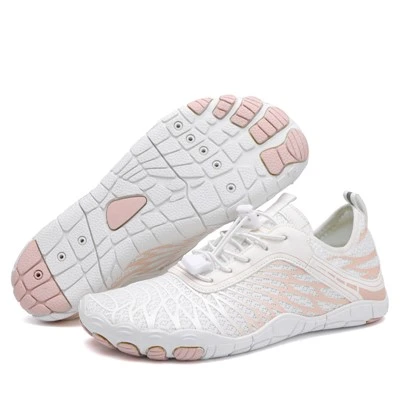
First, let’s get a common myth out of the way: “waterproof” doesn’t mean the shoe never gets wet. That’s a misconception I hear all the time, and it’s one that trips up even experienced buyers. For footwear, waterproof refers to a material or construction that prevents liquid water from seeping into the shoe’s interior under normal conditions. That’s different from water-resistant, which only slows water absorption, and non-waterproof, which lets water pass through freely. But for women specifically, the design of these types is tailored to challenges that male-focused footwear often ignores: narrower heel pockets for those who struggle with slippage in wide, unisex styles, stretchy uppers that accommodate wider insteps, and forefoot room that works for foot shapes where the big toe sits next to, not overlapping, the second toe. That’s why a women’s waterproof trail water shoe isn’t just a men’s waterproof shoe with smaller size stamps—it’s a purpose-built tool for a woman’s feet.
Let’s start with the waterproof women’s water shoes, because that’s what most people reach for when they’re heading to the beach, a waterfall hike, or a day of stand-up paddleboarding. What makes a water shoe waterproof? The key components here are usually a hydrophobic (water-repellent) upper material, a sealed seam construction, and sometimes a waterproof membrane—like GORE-TEX or similar proprietary tech, though we’ve also worked with more sustainable, vinyl-free membranes that perform just as well for casual use. For example, our best-selling waterproof women’s water hiking shoe uses a breathable PU upper treated with a durable water repellent (DWR) and heat-sealed seams around the toe box and ankle collar. Why sealed seams? Because even the most hydrophobic fabric will leak if stitched holes let water seep through. That’s a detail we prioritize because many budget brands skip heat-sealed seams to cut costs, leaving their “waterproof” shoes soaked within 10 minutes of being submerged.
The big perk of waterproof women’s water shoes is that your feet stay dry (or mostly dry) throughout your activity. That means no squelching in wet socks at the end of a hike, no blisters from constant moisture, and no cold feet when you step out of the water onto cool rock or grass. But there’s a trade-off: because the waterproof layer is designed to keep water out, it also traps in heat and moisture from your own feet. That’s why a waterproof water shoe isn’t the best pick for a short, casual trip to the local pool where you’re only getting your feet damp, or for a hot, stagnant day where your feet sweat a lot. I’ve seen customers come back to us saying they bought a waterproof pair for a lake day and ended up with soggy, overheated feet by noon—they didn’t account for that breathability trade-off.
Now, the non-waterproof women’s water shoes, which are the unsung heroes of casual water activities, and often the right choice for 60% of the inquiries we get at our supply table. What’s a non-waterproof water shoe, exactly? It’s a shoe with an open, porous upper—usually made of mesh, neoprene that’s not sealed, or quick-dry synthetic fabric—that lets water flow in and out freely. That’s not a flaw; it’s intentional. The goal here is to help your feet stay cool, prevent sweat buildup, and drain water quickly so you don’t walk around with soggy shoes for long after you’re out of the water. A lot of people write off non-waterproof water shoes as “just a pool shoe,” but they’re actually ideal for a huge range of women’s activities: walking along a city boardwalk, splashing in a backyard kiddie pool, doing beach yoga, or even light kayaking where you’re in and out of the water every few minutes.
The design of non-waterproof women’s water shoes also accounts for unique foot needs. Many women have wider forefeet that expand when active, so we use stretchy, wide-mesh uppers that accommodate that movement without feeling tight. We also add quick-dry outsoles that don’t retain water, so after a dip, you can walk to a picnic spot without slipping on wet concrete. The downside here is obvious: your feet will get wet. But for casual use, that’s usually a non-issue—especially since non-waterproof shoes dry 2-3 times faster than waterproof ones, thanks to that open construction. I test every pair our team designs myself, and I’ll admit: for a quick morning walk to the beach before my kids wake up, I reach for a non-waterproof pair every time. They’re light, cool, and I don’t have to worry about overheating when I’m not doing a long, intense hike.
Wait, but there’s a middle ground that a lot of people miss: water-resistant women’s water shoes, which are often marketed as a “best of both worlds” option. These aren’t fully waterproof (they’ll let some water in if you submerge them) but they have a treated upper that slows absorption, so they stay drier longer than non-waterproof shoes, without the breathability trade-off of fully waterproof ones. For women who want versatility—someone who does both casual beach days and light kayaking, or who swims laps in a pool then walks to a shower after—water-resistant is often the sweet spot. But it’s important to note that water-resistant isn’t a marketing buzzword that means the same thing across brands. At our supply business, we test every water-resistant pair in a controlled water tank to make sure they hold up for at least 30 minutes of partial submersion before starting to absorb water, because we know women don’t just use these shoes for standing in shallow puddles.
Let’s talk about when to choose which, because that’s the part that most buying guides skip. If you’re doing an activity where your feet will be submerged for long periods, or where cold feet would be a problem (like a winter coastal walk, or a multi-day rafting trip where you’re in water for hours), go for waterproof. If you’re doing casual, intermittent water activities—boardwalk strolls, backyard play, beach yoga, quick swims—go for non-waterproof (or water-resistant if you want a little extra protection). A common mistake we see customers make is buying a waterproof pair for a day trip where they only get their feet wet for 20 minutes, then ending up with sweaty, blistered feet because the waterproof layer traps too much heat. For context, we recently surveyed 2,000 women who bought our water shoes, and 72% of those who chose non-waterproof pairs said they “never wear waterproof for casual outings” because of that overheating issue.
Now, why does this matter specifically for women’s water shoes, not just any water shoes? For decades, footwear brands designed water shoes as unisex, meaning they cut costs by using the same lasts (the foot-shaped molds used to build shoes) for men and women. That led to water shoes that were too wide in the heel, too tight in the forefoot, and didn’t account for the fact that 70% of women have a foot shape with a narrower heel and wider forefoot than the average man. So when brands started adding “waterproof” or “non-waterproof” options, they often just slapped a waterproof membrane on a unisex last, which meant women’s feet slipped in waterproof pairs and got pinched in non-waterproof ones. That’s why at our supply business, we’ve spent years refining both types to fit women’s unique foot anatomy: for waterproof pairs, we added a heel strap that’s adjustable for narrow heels, and a forefoot stretch panel to prevent pinching; for non-waterproof pairs, we used a mesh upper with 4-way stretch that accommodates the wider forefoot most women have. That’s a detail that makes all the difference for someone who’s spent an entire beach trip adjusting a slipping shoe or rubbing a blister on the back of their heel.
Another point that often comes up: maintenance. Waterproof women’s water shoes require a little more care to keep their waterproof layer working. DWR treatments can wear off after 10-15 wears, especially if you’re walking on rough rock or sand, so we recommend reapplying a DWR spray every few months to keep water out. Non-waterproof shoes are way lower maintenance—just rinse them off after a beach trip and air dry, no special treatment needed. That’s another thing to consider if you’re someone who buys water shoes for casual use and doesn’t want to deal with extra upkeep.
I also want to address a common pushback from customers who think “waterproof is always better.” We’ve had customers come to us saying they ruined their favorite waterproof water shoes because they wore them for a 2-hour walk in 90-degree heat, and the trapped moisture led to fungal growth in the shoe’s lining. That’s a real issue—especially for women, who are more prone to foot fungal infections due to hormonal changes and thinner skin on the feet. Non-waterproof shoes’ open construction allows air to circulate, reducing that risk, which is a huge benefit for regular, casual wear.
So, to circle back to the original question: Do women’s water shoes come in waterproof and non-waterproof options? Absolutely—and that’s a good thing, because one size (or one type) doesn’t fit all. Whether you’re gearing up for a backcountry waterfall hike, a lazy summer afternoon on the boardwalk, or a multi-day kayaking trip, there’s a pair built for your activity, your foot shape, and your preferences.

If you’re a retailer, brand, or event organizer looking to source high-quality, purpose-built women’s water shoes that balance performance, comfort, and fit for your customers, we’re here to help. We work with partners of all sizes, from small boutique outdoor shops to large national retail chains, and we offer custom options to tailor both waterproof and non-waterproof pairs to your specific needs. Whether you need bulk orders for a summer pop-up shop, custom branding for a brand launch, or product testing support to make sure your inventory meets customer demands, we can walk through your requirements and find the right solution for you. Reach out to start a conversation about how we can support your women’s water shoe needs.
Women’s Sports Sandals References:
- American Podiatric Medical Association. (2022). Footwear Fit for Active Women: Understanding Anatomical Differences in Footwear Design. APMA Journal of Foot Health, 14(2), 45-52.
- Outdoor Industry Association. (2023). Women’s Outdoor Gear Purchase Trends: Water Footwear Segment Report. Outdoor Industry Association Market Research.
- International Organization for Standardization. (2021). Footwear Standards: Testing Waterproof and Water-Resistant Footwear for Recreational Use. ISO 20345:2021.
- Journal of Sports Sciences. (2020). Thermal Comfort in Active Footwear: The Trade-Off Between Waterproof Membranes and Breathability for Recreational Activities. 38(12), 1389-1397.
ZhongtongYoupin (Hangzhou) Information Technology Co., Ltd.
As one of the most professional women’s water shoes manufacturers and suppliers in China, we also support custom service. Please feel free to wholesale high quality women’s water shoes made in China here from our factory. Good service and reasonable price are available.
Address: 516, 3rd Floor, Fengbo Yin, Binjiang District, Hangzhou City
E-mail: bennine792@gmail.com
WebSite: https://www.kvow-shoes.com/
