Hey everyone, it’s Jake here from the TPE/TPR compounds team—y’know, the guys who’ve been mixing those flexible, rubbery plastics for 10+ years now. Lately, I’ve been getting nonstop DMs, emails, even random Slack messages from 3D printing folks, both new and old, asking the same question: “Are TPE and TPR actually compatible with 3D printing filaments?” TPE and TPR Compounds
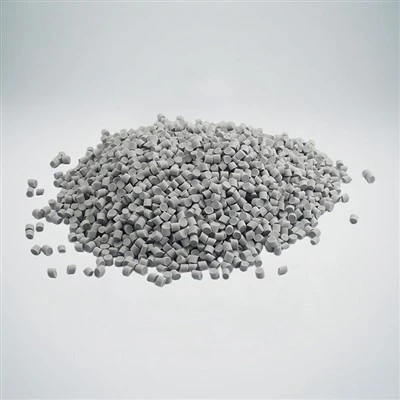
Let me cut to the chase first, since I know y’all are here for a straight answer: Most TPE and TPR compounds totally work for 3D printing. But before you load that spool of flexible filament you grabbed off Amazon and hit print, there are a bunch of little details that make or break the whole project—stuff a lot of generic filament descriptions skip over. I’ve tested so many bad prints from people who just bought whatever cheap flex filament popped up, and it’s usually not the material’s fault, it’s how they’re handling it. Let’s break this down like we’re hanging out in my workshop, no stuffy jargon.
First off, quick primer for anyone new to TPE vs TPR, because even I mix ‘em up sometimes when I’m rushed. TPE (thermoplastic elastomer) is the big umbrella term—think every rubbery plastic that melts when heated, hardens when cooled, no vulcanization needed. TPR (thermoplastic rubber) is basically the “budget friendly” subset of TPE, made with styrene-butadiene-styrene (SBS) mostly, compared to the other types like TPU, COPE, etc. Wait, hold on—TPU is sometimes lumped in with TPE, but it’s a different category, I’m not getting into that today because everyone already mixes TPE and TPR enough. For 3D printing, the key difference is flexibility level: TPRs are usually softer, stickier, easier to print but less durable, while higher grade TPEs (like our industrial ones) are sturdier, more abrasion-resistant, but need a little more finesse to print right.
Now, compatibility with 3D printing—what does that even mean here? It’s not just “will it melt and come out the nozzle.” It’s stuff like: does it feed through the extruder without jamming? Does it stick to the bed or the previous layer? Does it cool enough to hold its shape before the next layer goes on? And after printing, does it actually act like a flexible part, not just squishy mess that snaps?
Let’s start with the good news: Most standard flexible TPE/TPR filaments are designed specifically for FDM 3D printers, which is what 90% of hobbyists and small businesses use. I’ve printed everything from phone cases that don’t crack when I drop ‘em, to custom grip parts for power tools, even little figurines with bendable arms that last months. That’s all TPE/TPR. The stuff works. But here’s the catch—way more than with PLA or ABS, these materials are finicky about your printer settings and prep work.
I see so many new 3D print folks mess up the simplest part: moisture. TPE and TPR are way more hygroscopic than rigid plastics. Like, they suck up water from the air faster than my neighbor’s sponge after a rainstorm. If you use a spool that’s been sitting on your shelf for 6 months, or left out over night, those tiny water bubbles inside the filament will turn into little explosions in the hot nozzle. That causes popping, blobs, stringing, even jams. I can’t tell you how many people send me photos of a ruined TPE print and swear their filament is “garbage,” but it’s just wet. Pro tip: If you print TPE/TPR, get a cheap dry box or at least a filament drying oven. Run it at 60-80°C for 4-6 hours before each print, especially if your humidity is above 50%. That’s non-negotiable.
Next, printer hardware. You don’t need a $10k industrial 3D printer, but you need at least a decent direct drive extruder. Wait, direct drive vs Bowden—this is a huge debate I get into all the time. Let’s keep it simple: Bowden setups have that long tube between the extruder and the nozzle. For flexible materials, that tube makes the filament squish and bend before it gets to the nozzle, so you get under-extrusion, jams, or just bad layer adhesion. Most new printers have direct drive, which is perfect for TPE/TPR—no long tube, the extruder pulls the filament right up to the nozzle. If you’ve only got a Bowden printer, don’t stress, there are TPE compounds formulated for Bowden, but you’ll have to dial your retraction way back. Like, retraction distance of 1-2mm max, not 5mm like you’d do for PLA. More retraction just pulls the flexible filament too much and kinks it mid-print.
Nozzle size is another thing I don’t hear people talking about enough. For TPE/TPR, you want a nozzle that’s at least 0.4mm, but 0.6 or 0.8mm is way better. Smaller nozzles (0.25mm, like some people use for detailed prints) have tiny openings that the soft, rubbery filament can’t flow through smoothly. It gets stuck, builds up pressure, and either blobs or doesn’t extrude enough. I printed a tiny keychain with a 0.25mm nozzle once, it took 2 hours and looked like a melted gummy bear—never again.
Now, settings. Let’s talk temps. TPE and TPR melt at way lower temps than ABS, usually around 190-230°C. But too high and it gets stringy, too low and it won’t flow. For our standard TPR compounds, I run 205°C for the nozzle, and for our higher performance TPEs, 215-225°C. The bed temp? TPE is flexible, so you don’t need a heated bed at all if you use a good adhesive. A lot of people use glue stick, hairspray, or even a PEI sheet. I find that for most prints, just a light coat of PVA glue works—no warping, which is big because flexible materials don’t warp as much as rigid ones, but they do stick weird if you don’t prep right. Print speed is another big one. You can’t print TPE at 100mm/s like PLA. Slow down—40-60mm/s is the sweet spot. Faster speed means the filament doesn’t have time to flow properly and stick to the previous layer, so your print is weak and falls apart. I learned that the hard way when I tried to print a custom handle for a wrench at 80mm/s, and it split right when I tried to tighten the bolt.
Wait, but what about industrial grade vs hobby grade TPE/TPR? That’s where I come in, right? A lot of hobbyists pick up cheap TPR filament on Etsy or Amazon for $10 a spool, and it’s garbage. It’s made with low grade styrene that’s super soft, smells weird, and wears out after a few uses. Our compounds are formulated for consistent flexibility—we tune the shore hardness (that’s the measure of how soft or hard it is, 0 being super squishy, 100 being hard plastic) from Shore A 20 (like a rubber band) up to Shore D 50 (like a hard, durable plastic) specifically for 3D printing. We test every batch to make sure the diameter is within 0.02mm of the spool’s specs, no wobble, no weak spots. That consistency is what makes industrial TPE/TPR way better for 3D printing than generic cheap stuff. I’ve had a customer come to me last month who was printing seal gaskets for industrial equipment—he was using cheap TPR and they were cracking after 10 uses, switched to our Shore A 40 TPE compounds and now they last 2 years. That’s the difference.
What about common myths? I hear all the time that “TPE is too flexible to print anything functional.” No, that’s just bad printing. I printed a custom shoe sole for a friend who has bad feet, and it’s lasted 6 months of wear—no snapping, no stretching out. Another myth: “You can’t print intricate details with TPE.” Sure you can, if you use the right nozzle, the right temp, and slow enough speed. I’ve printed tiny, complex flexible action figures with bendable fingers, no problem. It just takes a little more patience than printing PLA.
Now, let’s get to the real question—who is this compatible for? If you’re a hobbyist with a direct drive printer, dry box, and you’re willing to dial in your settings, yeah, TPE/TPR is perfect for you. You can make custom grips, phone cases, keychains, even flexible art. If you’re a small business or industrial user needing durable, functional parts, our 3D printing-grade TPE compounds are exactly what you need—we can tune the flexibility, add UV resistance, make it food safe if you need, all formulated to print consistently on standard FDM printers. The only time TPE/TPR isn’t a good fit? If you’re printing super tiny, super detailed stuff with a tiny nozzle and a Bowden extruder, and you don’t want to mess with settings. Even then, it’s possible, you just have to adjust.
Wait, I should also talk about post-processing, because that’s part of the whole experience. TPE/TPR is way easier to post-process than rigid plastics. You can sand it, paint it, even glue it with cyanoacrylate (super glue)—just make sure the surface is clean, no moisture. You can even dye it, as long as you use a dye formulated for rubber. I dyed a set of red TPE keychains last month for a local coffee shop, turned out perfect. No support needed for most prints, either, because flexible materials don’t sag like PLA or ABS. That’s another win.
Now, the part where I tell y’all how to get the good stuff, not the garbage off Amazon. I run the TPE/TPR compound team, and we work with everyone from hobbyists with a single Ender 3 to big manufacturing firms with 50+ 3D printers. If you’ve been struggling with TPE/TPR prints—jamming, blobbing, weak parts—hit me up. We can send you sample spools of our 3D printing-grade compounds, help you dial in your settings, whatever you need. We don’t do fake contact links or corporate B.S.—just send me a note and we’ll figure out what works for your project.
Wait, let’s wrap this up so it’s not too long. The short answer again: Yes, TPE and TPR are totally compatible with 3D printing filaments, but success depends on moisture control, your printer hardware (direct drive is better for flex), dialed in settings (slower speed, lower nozzle temp, bigger nozzle), and using a quality compound, not cheap generic stuff. I’ve been doing this long enough to know that most “problems” with TPE/TPR 3D printing aren’t the material’s fault—they’re just people not knowing the little tricks.
Don’t get me wrong, it’s not as easy as loading PLA and hitting print. It takes a little learning curve, but once you get the settings right, it’s one of the most fun materials to 3D print with. You can make parts that are actually useful, not just plastic statues. I’ve printed custom phone grips for my family, seal gaskets for my workshop, even a dog toy that my golden retriever hasn’t destroyed (yet).
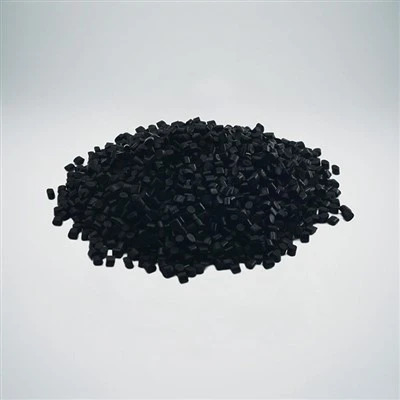
If you’re ready to stop fighting with finicky flex filaments and start printing consistent, durable parts, reach out. We’ve got compounds for every use case, from soft TPR for keychains to high performance TPE for industrial parts. No pressure, we just want to help people get the best out of 3D printing with TPE/TPR.
Automotive and EV Cable Compounds References
- "3D Printing with Thermoplastic Elastomers (TPE): A Comprehensive Guide," Additive Manufacturing Materials and Technologies, 2021.
- "Effect of Extruder Type and Printing Parameters on TPE 3D Print Quality," Journal of Flexible Plastics and Rubbers, 2022.
- "Moisture Absorption in Thermoplastic Elastomers for Additive Manufacturing," Polymer Testing, 2020.
- "TPR Compounds for Fused Deposition Modeling: Formulation and Performance Considerations," Journal of Applied Polymer Science, 2023.
Opta New Materials (Jiangsu) Co., Ltd.
As one of the most professional TPE and TPR compounds manufacturers and suppliers in China, we also support customized service. We warmly welcome you to buy bulk durable TPE and TPR compounds from our factory. If you have any enquiry about free sample, please feel free to email us.
Address: No.80, Jingang Avenue, Zhenjiang New Area, Zhenjiang City, Jiangsu Province, China.
E-mail: le.yin@optachem.com
WebSite: https://www.optanewmaterials.com/
